John Petrucci – Terminal Velocity Sound Mind Music
by Derek J. Smith
Editor
With the lockdown of COVID-19, Dream Theater guitarist John Petrucci finally began work following up his 2005 debut solo album, Suspended Animation. In 2020, Terminal Velocity features a bit of everything you’d expect from Petrucci. Surprisingly, however, there’s a lot more throughout the albums various nooks and crannies that makes Terminal Velocity one of the best things John Petrucci has ever produced – including his prior solo effort and most Dream Theater albums. With the title track as an impactful first song on the album, the listener may feel overloaded: “What else is there could Petrucci have to offer? Did I just hear everything he could do?” The other big question asked: “That was just one song – will Petrucci and former bandmate Mike Portnoy recapture the feeling of working together?”
Put it this way: There were no expectations which could prepare you for the incredible song-writing and musicianship encountered on Terminal Velocity.
The technical versatility may feel daunting but is not at all over-stated. Petrucci said he had a lot of time to write this album over the lockdown from COVID and it absolutely shows. Terminal Velocity is not the technical showcase which one would come to expect from Dream Theater albums. Petrucci’s songs feel well-plotted out all the while produced and written with feeling and emotions in mind. While Terminal Velocity feels as if it crams ideas together similar to Devin Townsend’s opening track on his 2019 album Empath – everything works together and establishes tidbits of what the album will be presenting as the listener gets into it.
The familiar intro to The Oddfather is rather tongue-in-cheek and may put a smile on the face of the listener. The Oddfather features so many delicious riffs in the song, making it feel like an early Dream Theater song with styles somewhat mixed in-between Dream Theater albums Awake and Systematic Chaos. Bassist Dave LaRue is simply brilliant, laying foundation across the track and adding a solid level of depth to the song.
Happy Song delivers just what the title suggests – upbeat progressions with bright and cheery lead solos. Meanwhile, Gemini kicks off with heavy riffs and a hefty dirty bass tone from LaRue, reminiscent of heavy grooves from Liquid Tension Experiment. Yet the song continues its various fluxes with Spanish influences-turned-shuffle, and powers through with a wider mix of different genres in its six-minute existence.
Out of the Blue is a nice, mid-paced song which was unexpectedly needed in the middle of the album, giving the listener a breather and soothing them down from the intensity before it. The song does a slow and progressive build up at the end, making the mid-tempo intro riff to the next song, Glass-Eyed Zombies even that more appreciated. In Glass-Eyed Zombies, the gradual build up of from its introduction is a brilliant way to get the listener up to the speed that marked the first half of the album with a ripping solo and chugging thrash metal rhythms.
The bright, almost operatic The Way Things Fall, lets LaRue shine in a handful of moments while still showcasing Petrucci’s solos. Meanwhile, Snake in My Boot portrays a rocking country-metal hybrid anthem we didn’t know we needed.
In the final track, Temple of Circadia, it’s easy to compare to introductions of Dream Theater’s Bridges in the Sky or The Shattered Fortress, yet much like the entirety of the album, there’s lots for the listener to chew over – from the odd time signatures to the intense polyrhythms Portnoy throws upon the song.
Although it definitely feels like a John Petrucci album – and that Mike Portnoy is certainly a big-name draw – there’s a history between these two musicians which cannot be replicated. One can really tell how the two musicians have bonded together. Despite it being over ten years apart from writing music with one another, the melding of their two minds works brilliantly. The emotional impact of two old friends working together is something which literally cannot be replicated if one tried.
The brilliance the two musicians achieve between one another is not hyperbolic if one reminisces of their halcyon days together. Petrucci and Portnoy are musicians who understand one another and are on the same wavelength when it comes to performance and song writing. Terminal Velocity, even unconsciously, comes together as an album celebrating both music and friendship. It may not have been intentional while writing the album, but it certainly feels that way when listening to it.
If we could only get more honest albums like this from musicians, the world of music would most certainly be a better.
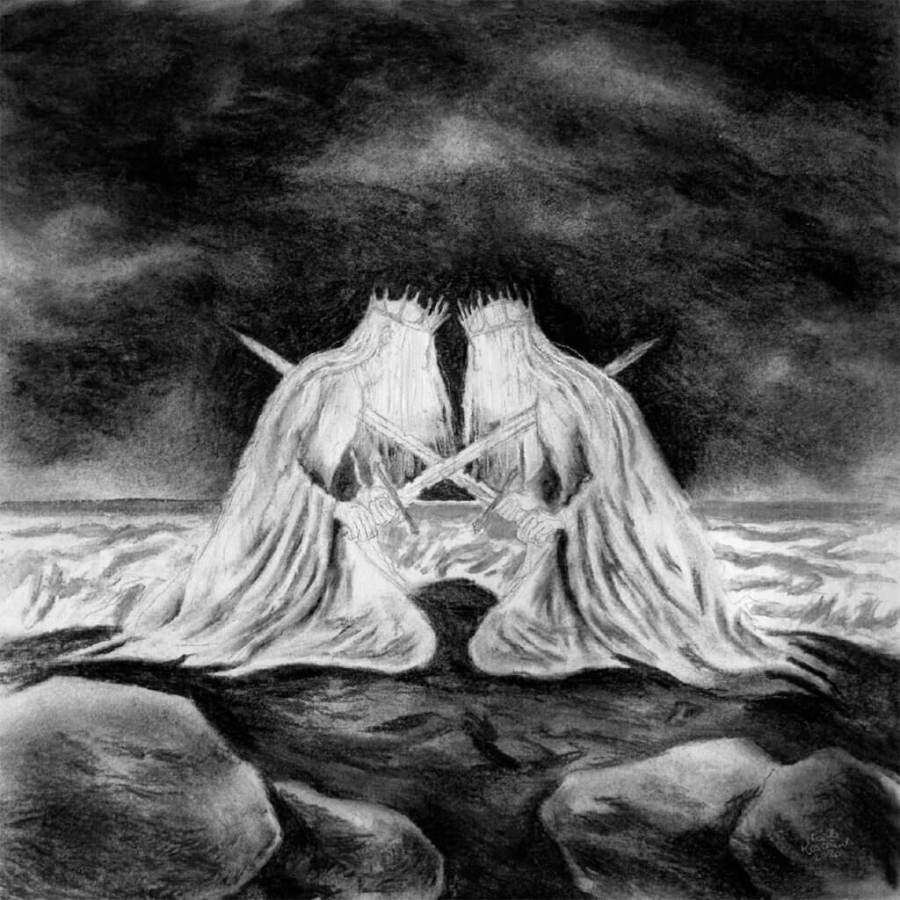
Havukruunu – Uinuos Syömein Sota Naturmacht Productions
With the release of their third album, the Finnish band Havukruunu prove once again why all eyes are on them on the forefront of pagan black metal.
Blasting right out of the gates, the self titled track feels like it throws everything you’d expect from the genre in one song – but it’s only the beginning. The triumphant melodies and searing guitar tones feel fresh and unique. The riffs are intense and dark, yet they are coloured with triumphant undertones. Enchanting vocal harmonies are intertwined with guitar melodies creating a brilliant, epic feeling.
The wonder of these moments can be heard in songs like Ja Vimein On Yö – where beyond the battery of the percussion, the uplifting darkness is built up during the chorus and then continues throughout. Among the call and response vocals in the song, guitar melodies shape the background and create a powerful ambiance ultimately transitioning into a impressive and moving solo. All of these efforts appear easy and natural but are certainly well thought out to achieve the presented effect.
The percussion intensity continues with Pohjolan Tytär – which is arguably the most straight-forward song on the album. Yet the beating of the drums vary enough, along with the haunting solos, and epic vocal harmonies, to create a wonderfully crafted feat. While the band may often be compared to others in the scene such as Moonsorrow and Mgła, Havukruunu manages to generate a particular feel and soundscape in their music which certainly makes them stand away from such comparisons.
In fact, Havukruunu almost makes themselves uniquely virtuoso with their guitar work. Varying guitar solos midway in the song Vähiin Päivät Käy stand out as some of the most pinnacle moments on the album. Transitions between the different solos are flawless and as the song goes back to its main riff, one cannot help but feel the chills go up their spine.
Meanwhile, the closing track features so much variation, fresh ideas, and feelings which seem somewhat unusual to pagan black metal. Havukruunu bring and transition modern concepts and technology to the genre to create an interesting final piece to the album that almost acts like a cliff hanger for their next release.
The dichotomy between Havukruunu’s pagan roots and modern concepts seam together flawlessly to create an absolute feat of an album. Uinuos Syömein Sota may be not only one of the best black metal releases this year, but one of the best albums released in 2020.
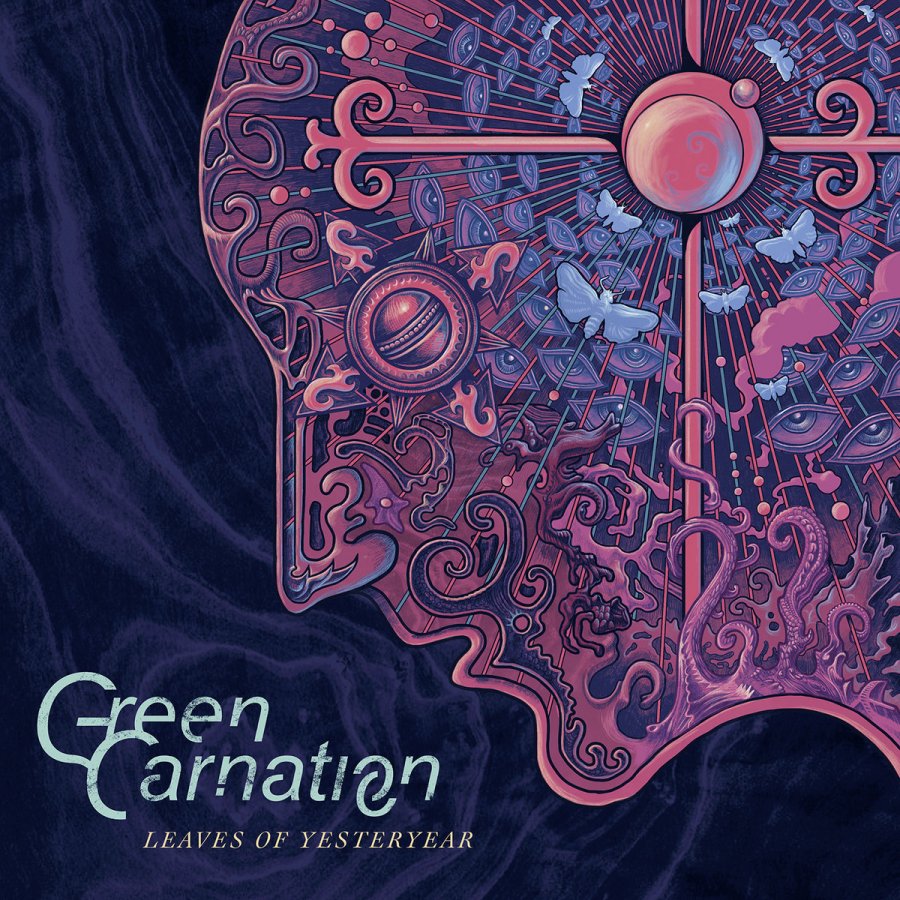
Green Carnation – Leaves of Yesteryear Season of Mist
Forget Tool’s length between albums. From the ashes rise Green Carnation and their newest album in fourteen years, Leaves of Yesteryear. The modest progressive metal pioneers, well-established because of their 2001 opus, Light of Day, Day of Darkness, come forward with another album with their unique twist on the genre.
Mixing elements from black, doom, and progressive metal, Leaves of Yesteryear is yet another gem from these Norwegian musicians featuring four new songs and a re-recording of a song off of their debut album, My Dark Reflections of Life and Death.
The real beauty within the album derives from the subtle intricacies sprawled throughout. The chorus of title track, for example features a plain sounding trumpet effect from the keyboard. Mixed with the instruments, it becomes epic. As the chorus replays throughout the song, the trumpeting builds with orchestral brilliance.
On Sentinels, the transition from bridge to the final chorus features two measures in 4/4 timing. Traditional songs would use one measure to transition – but Green Carnation’s brilliance extends it to two: the first featuring the music ringing out from the bridge and the second coming in with sustained vocals and a beautifully simplistic drum fill – resetting the tempo of the song. These little bits in the songs seem minor but absolutely add much needed vigor and strength into what some may feel as an overtly virtuoso and stale genre.
The rerecording of My Reflections breathes new life into the song. Despite its twenty year age, it fits well within the album and still feels new. Not many bands can say they’ve accomplished such a feat.
While progressive metal seems to showcase flashy solos and technical unisons, Hounds shows how progressive metal can have both groove and heart. The chorus demands the listener to sing along. The thumping bass keeps a steady groove and features refreshing R&B variations that are not often referenced in the genre.
The album concludes with Solitude – a cover off of Black Sabbath’s Master of Reality. Arguably the weakest song on the album due to its solemn nature, Solitude is haunting, beautiful, and sad – a different kind of feel from most of the album. While the track sorting of the album lets Solitude work best as the last song, it feels strange the album wasn’t bookended with another bolder song as a pick-me-up.
After a long hiatus, Green Carnation returns to form with Leaves of Yesteryear. It’s something familiar of fans who have stuck with the band over the years, while still presenting something different. It’s a complicated album masking itself as simplicity. The Leaves of Yesteryear has depth, courage, and teeth to it. It is definitely one of the best progressive metal albums I’ve heard in the past decade.
Welcome back, Green Carnation. You were sorely missed.
Video games have been permanently ingrained into culture. I’m sure everyone can recite the first seven notes from Nintendo’s 1985 Super Mario Bros. or can remember the creepy yet hastily descending “doots” from Space Invaders.
While those songs are certainly memorable, I personally do not consider them to be “great.” What defines great? That’s a matter of personal preference. Do not let me tell you what to enjoy. However, this is my personal list of the Best Video Game Songs – NOT soundtracks – that I could come up with. In no particular order:
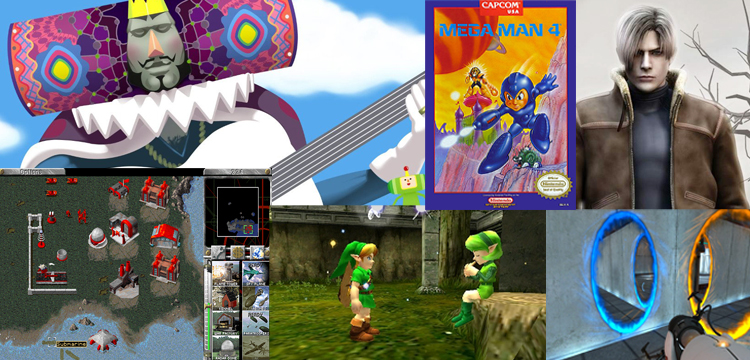
The Legend of Zelda: Ocarina of Time – Hyrule Field Main Theme (Nintendo 64 – 1998)
There’s two games that “blew me away” when it came to their open world. One game was The Elder Scrolls IV: Oblivion when you leave the prison (you folks know what I’m talking about). But the first game that really impressed me was The Legend of Zelda: Ocarina of Time. One reason was because I had never played a video game like it before. The other reason was because of the incredible theme that accompanied the first appearance of this “open world.” The field of Hyrule was my playground, filled with places to explore and had danger afoot. The music manages to encapsulate the feelings of wonder and excitement of exploring.
Mega Man 4 – Dive Man (NES – 1991)
With such a wide arrangement of Mega Man games to choose from, why Dive Man’s stage? Dive Man’s underwater level hits a few points home: the low bass tones emphasize the deep water within the level. The lead MIDI has a bit of a strange ring to it when it peaks, suggesting to me the villainy behind the level. The song also builds up and builds down both flawlessly and seamlessly. I could hear the song play for hours and not expect an “ending” per se, from it. It’s one of the few Mega Man songs that will pop into my head from time to time and really make me want to hop back onto my NES and lose an hour in the game.
Command & Conquer: Red Alert – Hell March (PC – 1996)
Some people may say Metallica was their first encounter with heavy metal music. But if you lived in a shell like I did, you either first heard it from Doom or Command & Conquer: Red Alert. The Hell March is a literal staple in video gaming. The sluggish, hefty bass riff leads the charge (or march) with a steady 4/4 drum beat and distorted guitars. Verses, while mostly simple chugging riffs, evoke thoughts of the battles between a Mammoth Tank vs. a Tesla Coil, or attack dogs mauling down an enemy spy. The theme was updated in both sequels of the game, but there’s a simplistic nostalgia from the original theme that cannot be replicated.
Homeworld – The Beginning and the End (PC – 1999)
Homeworld is widely regarded as having one of the greatest soundtracks for a video game. As one of the first songs in the game, The Beginning and the End, brings me sheer bliss. This real-time space strategy game introduced a full X, Y, and Z axis to gaming – a feat for its time. Composer Paul Ruskay managed to create a brilliant track to get the user familiar with the gameplay mechanics. The peaceful song not only keeps the player cool during the tutorial, but also establishes the true vastness the game brought – you’re in space after all! This song has been on repeat at my home for years as its calming effects are trance-like. It is hands-down one of my favourite songs ever.
Stardew Valley – A Flicker in the Deep (PC, Switch, PS4, Android – 2016)
It’s short, it’s sweet, and it’s my favourite song the soundtrack has to offer. In its wide variety of moods, from seasonal themes, to battles, A Flicker in the Deep brings a sort of joy which I feel isn’t captured in any other song in the game. While it may be one of the shortest songs on my list, it’s certainly one of the most impactful ones.
Pokemon Red/Blue – Viridian City (Game Boy – 1998 US)
If there’s one song that always stood out for me, it’s the Viridian City theme from the original Pokemon games. Why? It kind of has a double meaning: at first, you enter Viridian City to get started on your journey. It’s the first major place you visit and get a feel for the game. It’s your established “base” until you make your way to the next city. However, Viridian City is also your LAST city in the game. You beat Team Rocket there and you make your way to the Pokemon League. The music, somehow, is nostalgic even while you’re in the game for the first time. It’s the first song to see you off, and the last song to see you go. With it’s peaks and relatively calming presence, it’s always cheering for you.
Terminal Velocity – Ymir Theme (PC – 1995)
3D Realms, folks. The original Duke Nukem, Blake Stone, Wacky Wheels, and more came from this company. Yet most people haven’t heard of the 3D flight simulation shooter, Terminal Velocity – which is okay! Let me bring you up to speed: you’re a ship and you shoot things. Now that we’ve got that out of the way, Ymir’s Theme, from level one, somehow made the gameplay feel a lot more epic than it actually was. With the heavy synth rising and falling over the industrial beats, you ended up listening to the loop multiple times in the level as you struggled to find where to go. To this day, the synths will make their appearance into my mind and I’ll just want to drop everything and shoot some tanks.
FTL: Faster Than Light – Milky Way (PC – 2012)
Whether you’re battling the rebels or making your next jump through space, FTL’s music is all something to awe over. However, Milky Way has a very calming, yet action-packed feel to it. The revving arpeggios from the beginning of the song continue throughout and end up becoming the background as lead instruments take over. The song is eerily simplistic, but rich with depth and lots of layers. A beautiful song.
Left 4 Dead – Tank Theme (PC, Xbox 360 – 2008)
I’ve spent many hours (days, even) playing L4D (Hi, Cherish and Andrew!) While it’s a short theme, you don’t even need to see the Tank coming to feel a sense of dread. The music does it for you. Operatic and booming, the Tank theme from Left 4 Dead, a “zombie” shooting game, absolutely strikes fear into the players. The main reason being: no one knows where the Tank, a super-strong Hulk-like “zombie,” is coming from. Valve built L4D as a game with no real “script,” meaning things don’t happen in an order – everything is randomized. A Tank can appear wherever. As such, it’s the music which really triggers the anxiety in the player – beginning you let the player fear what they cannot see.
Silent Hill – Silent Hill Theme (PlayStation – 1999)
Can anyone name me a song that’s both creepier and beautiful at the same time? I don’t think I need to say much about this one. It’s a classic. With traditional instrumentation and 90s synth, it’s an absolute wonder.
Resident Evil 4 – Echo in the Night (GameCube – 2005)
I may be biased, but Resident Evil 4 my favourite game in the series (I know, right? Please don’t fight me on it). As the game got drearier and darker, this theme played and wow. What a treat. The eerie, echoing howl right off the bat. The moody, dark tones in the background. Is that talking in the background or are my ears playing tricks on me? It’s an incredibly sinister song that is riddled with atmosphere.
Kirby’s Dream Land – Green Greens (Game Boy – 1992)
Kirby, man. What a guy (thing?) The song, Green Greens from the first stage is somehow playful, yet action-packed. It features a memorable lead that has an interesting twinge with it – enough to make it unique and stand out from other songs in the game.
Doom – At Doom’s Gate (PC – 1993)
Doom. Level One. You already know the song. Forget the Metallica influence. What can be said about At Doom’s Gate that hasn’t already been said? It perfectly captures the intensity, violence, gore, and speed which Doom is known for. A great heavy metal thrill ride, the loop of the song doesn’t feel exhausting nor does it begin to sound boring. As long as there’s bad guys to shoot, give me hell.
Portal – Still Alive (PC, PS3, Xbox 360 – 2007)
The end theme to Portal, the triumphant and hilarious song both wraps up the game and teases a future. It’s a painfully simplistic song, but it’s the lyrics and singing which certainly makes it standout – and original.
Katamari Damacy – Katamari on the Rocks (PS2 – 2004)
If someone were to ask me “What’s Katamari about?” I’d tell them, “You roll stuff up” and then play this track and walk away. That’s because I feel this song perfectly summarizes the enjoyment and amazement of the game. A joyful theme, it has enough strange in it to intrigue the listener to want to play. Great instrumentation, percussion, and singing, the song – and the soundtrack – puts a smile on my face. “La la la la la Katamari Damacy.”
Gunstar Heroes – Opening Theme (SEGA – 1993)
A triumphant opening to an arcade classic. Gunstar Heroes’ opening theme quickly fades into a grandiose anthem. With the spinning logo, the amount of sheer excitement one feels before pressing “start” cannot be ignored. The rest of the game’s music is great too, but the intro certainly takes the cake.
The crushing bass groove, technological babble in the background, and screeching metal throughout makes this song both original and powerful. When matched with the hefty bass sounds from the attacks in the game, it almost feels as if it’s part of the action. While this beast of a game was memorable for being a challenge for a lot of kids, I’m certain this song is memorable for the riffs within it.
Honorable mentions:
Sable Theme (PC – TBD)
There’s not much to be said yet about Sable. It’s an adventure game which is heavily influenced by the artist Mœbius. The song, Glider, is an original song written by Japanese Breakfast for the trailer. While there’s still no release date for the game, the song seems to at least capture the feeling of it.
Fallout 3 – Bob Crosby and the Bobcats – Way Back Home (PC, PS3, Xbox 360 – 2008, Bob Crosby – 1951)
While technically not a song from a game, the folks at Bethesda wanted to really make this post-apocalyptic world feel apocalyptic. How so? Digital music didn’t survive the nuclear fallout, only vinyl did. Crosby’s song somehow, ironically, manages to summarize the Fallout game perfectly.
I asked my brother what he felt were some of the best songs. He gave me this from Chrono Cross. Holy smokes, it’s great. The peaceful and calming music picks up after a minute and absolutely rocks. Taking advantage of the PlayStation’s higher audio capability, composer Yasunori Mitsuda knocks it out of the park. What a treat.
And that’s it!
Thoughts? Questions? Concerns? Did I miss a game? Is there something I should reconsider? Let me know in the comments below, or follow me on social media.


 UncannyDerek