Comic Book Video Games: A Brief Run Through

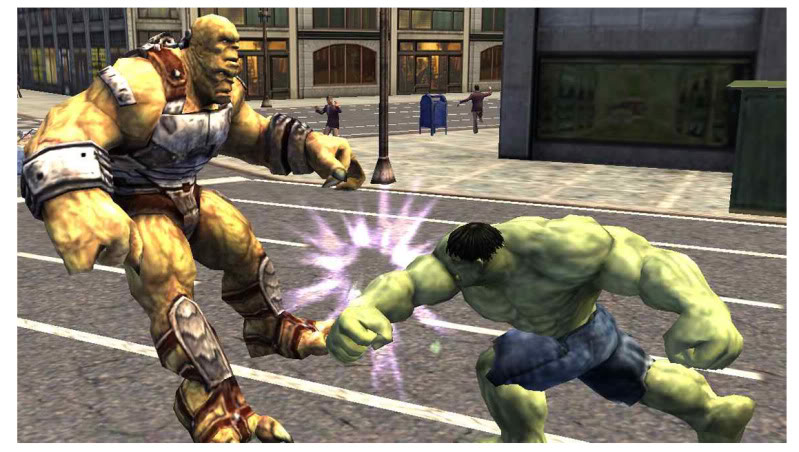
I’ve been playing a LOT of The Incredible Hulk: Ultimate Destruction for my Xbox 360 as of late. Yes, it’s the game based off of the Edward Norton movie, however, it’s actually pretty good.

To elaborate on what the game is like, imagine you’re playing Grand Theft Auto 3, but you’re the Hulk.
Incredible Hulk: Ulimate Destruction

I’m not kidding! (And take THAT, Bi-Beast!) The Hulk game features the actual landscape of Manhattan – landmarks and all – for you to destroy. It’s a vast improvement on other superhero video games, and I’m always drawn back to it because it’s open-ended, mindless destruction, yet constant fun. It’s sort of mind-boggling how well the game is crafted despite it being based off of a movie, as usually movie-based games are garbage. It’s far-superior to Eric Bana’s movie-based game, simply called Hulk, and of course, it is much more dimensional than the original Sega Genesis game. And no, not just more “third-dimensional.”

But I do believe that Batman: Arkham Asylum is the best superhero video game ever created. (Awaits the Billy Madison references). It captures everything which is Batman in a brilliant and exciting game. There’s no doubt about it, Arkham Asylum nails the board on the head when it comes to make a great game. Although it does not have much replayability, it triumphs in excellent gamepaly. It did such a great job in fact, that Spider-Man: Shattered Dimensions was trying to imitate the scope of the game.

Now that I have myself thinking. . .
Spider-Man Game Boy

Let’s go back to when these games really started to rise. I obviously cannot talk about EVERY game, but I’ll try to hit the main ones on the head. Most importantly, ones I’ve played.

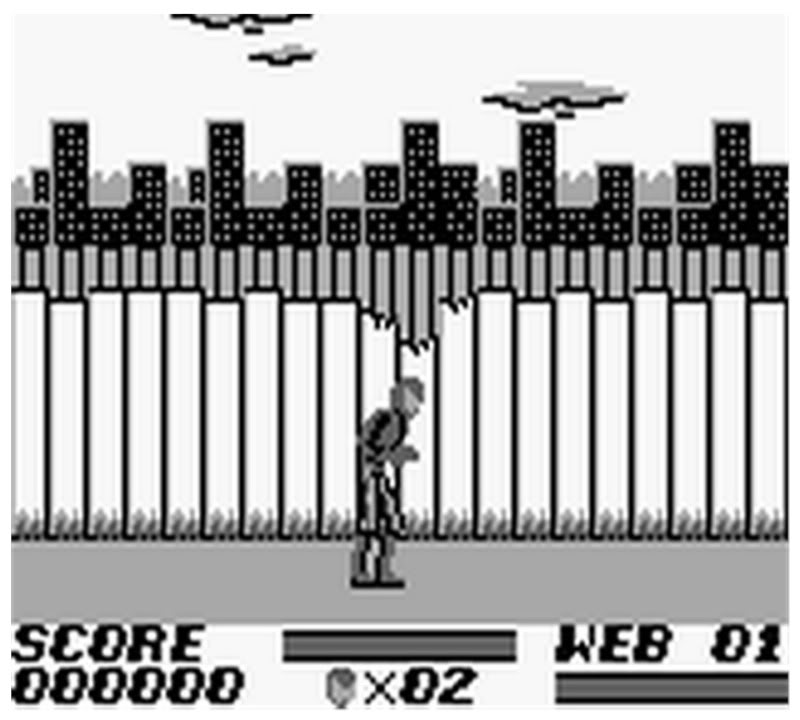
The earliest superhero game I can recall playing was The Amazing Spider-Man on my Gameboy, back in the 90’s. Look at those sweet graphics. You can almost tell it’s Spider-Man from them! All I can remember was always being out of web-fluid. Man, being Spider-Man IS hard. With no power came tons of responsibility to beat this game.
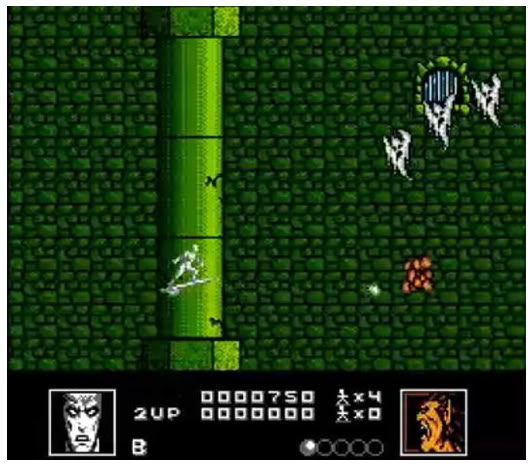
Silver Surfer Nintendo

But the game was not as hard as the Silver Surfer. This game would have me screaming at the television, while throwing my Nintendo controller away, freezing my console and possibly wrecking a vase or three. I’m sure you’ve all heard by now the notoriously difficult struggle this game was to everybody who played it. If you made it past the first stage on any level, you’ve gone further than I have. I mean, look at Mephisto’s face there. He’s scary as heck, and he wants me to get through his level without touching anything? You ask the impossible, sir.
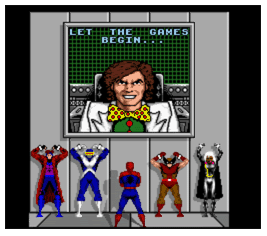
X-Men Spider-Man Arcade's Revenge

Does anyone else remember The Tick? He was fun! He was a breath of fresh air after the mind-numbing game play of Silver Surfer. In fact, him and Spider-Man/X-Men: Arcade’s Revenge were a blast! A large variety of characters to chose from: Spider-Man, Cyclops, Storm, Gambit, and Wolverine – each with their own levels. Oddly, Cyclops had his X-Factor costume in-game, but I’d just be looking like a real nerd if I’m reaching for continuity in a Nintendo game. I still remember seeing the commercials for this game back on my VHS copy of the X-Men pilot episode “Pryde of the X-Men.”

That’s right. I own it – Australian Wolverine and all.
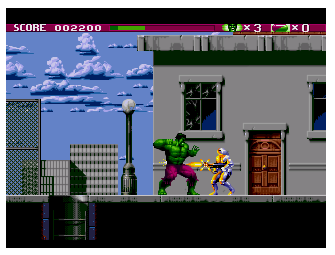
Incredible Hulk Sega Genesis

Lucky for me, after X-Men another great game came out: The Incredible Hulk for the Super Nintendo and Sega Genesis. I remember paying $50 back in the day for this game at a local independent video game retailer. Yeah! Those existed too! You started off as Bruce Banner and had to get beaten up to turn into the Hulk. And man, it was a blast! Villains like Rhino, Abomination and Tyrannus were such thrills to fight – but challenges too. I always had a hard time beating Tyrannus – who was the second-last boss, next to the Leader.
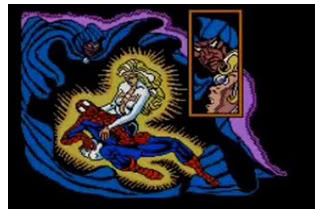
Spider-Man Maximum Carnage

Since Marvel was kicking so much butt in the video game business, why not release something else crazy? Spider-Man & Venom: Maximum Carnage was probably one of the most exciting video games to be released in that day. With a large roster of villains, an over-abundance of cameos, plus playing as Venom – this game was a child’s dream! Cloak and Dagger! Hooray! Too bad that the game was SO FRIGGEN’ HARD! I was always to happy to play it, but once you get into that second stage, climbing the building, it was all over. I hate you, Shriek!
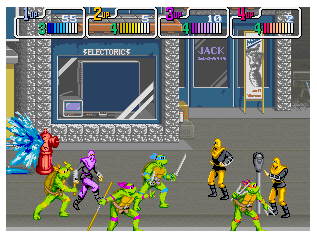
Teenage Mutant Ninja Turtles 2

Fortunately at this time, Teenage Mutant Ninja Turtles 2: The Arcade fell into my lap. Suddenly everything became brighter. I don’t think I need to say much about this game. It was, and still is the best TMNT game in existence. It surpassed the first game immensely, while made us laugh at how repetitive the third game was. This is what defined side-scrollers to me at such a young age. This game was, and still is, relentless fun. Unfortunately, the fun of side-scrollers were about to fall into the gutters again, when I played X-Men for the Sega Genesis. I just couldn’t win, could I? Faulty game play, plus ridiculously difficult levels made for a frustrating series of questions like, “Why did they make this game?” or “Why did we rent this again?” Ah, as kids, we didn’t know what we were doing.
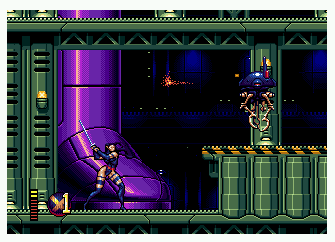
X-Men 2 Clone Wars

Well X-Men learned from its mistake, as X-Men 2: The Clone Wars came out with not only a great game, but had such an effective first-level song that I still play on it my bass guitar every-so-often. I can still remember teleporting with Nightcrawler becoming tremendously more fluid than that of its parent game while the controls also smartened up. Beast was fun to play as, while Psylocke also made a great player. No one ever plays as Psylocke. I did! She rules. Result!
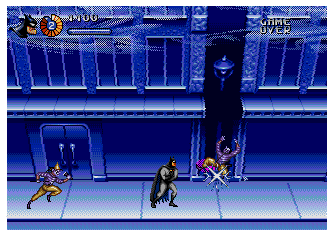
Batman and Robin Sega Genesis

Speaking of results, The Adventures of Batman & Robin was another great game. Based from the animated series, this DC game triumphed where Batman Returns failed, and Batman Forever was going to fail. Not to mention, it just looked really sharp and clean in comparison to Batman Returns.

With the release of the PlayStation, the world was lucky to retrieve my favourite Spider-Man game to-date, aptly called, Spider-Man. With the original voice actors from the ’90s cartoon series for Spider-Man, Doc Ock, and Black Cat, this game was a sure-fire hit for me. Bonus marks were awarded to this game with incredible alternate costume selections, including Captain Universe, plus a great alternative gameplay: What If? mode. I can remember countless hours of my life going into this game as it was probably one of my favourite releases for the PSX. The game was released on the Nintendo 64, however the What If? mode was removed for it. Lamesauce. The sequel wasn’t too bad either. Y’know, Spider-Man 2: Enter Electro?
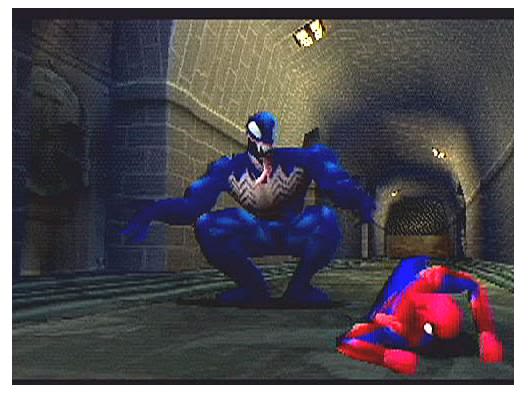
Spider-Man PlayStation

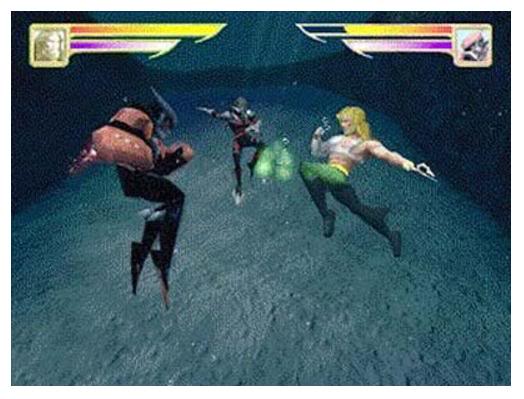
Speaking of lame, remember Superman for Nintendo 64? It was probably one of the worst games I’ve ever played. Nothing says “Superman” like literally flying through hoops for points. Aquaman GameCube Not to mention, the graphics were beyond sub-par for a game of its caliber. There was really no excuse for this mess. And to continue this mess from DC, none were as atrocious as Aquaman: Battle for Atlantis for the Nintendo Gamecube. What’s that? You didn’t hear of it? Neither did the rest of the world. Lucky them.
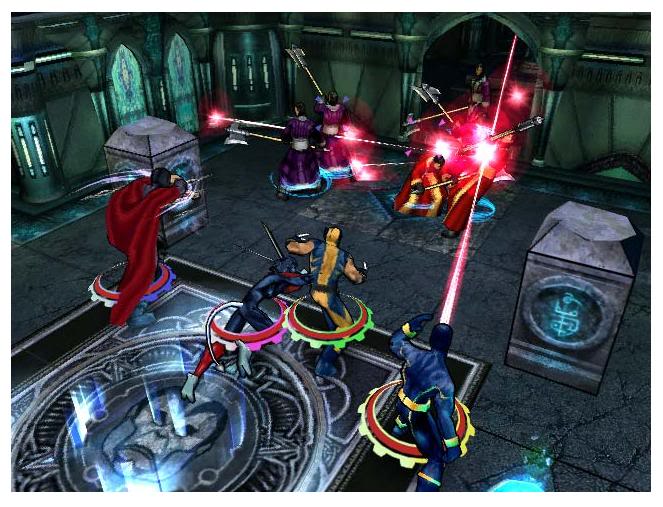
Much like the first X-Men game which improved with a sequel was the X-Men Legends series with X-Men Legends 2: Rise of Apocalypse. The first game was a bit of a flop with graphical issues and camera angles ultimately ruining the gameplay, but the sequel was mind-blowing fun. X-Men Legends 2: Rise of ApocalypseOnline multiplayer, mixed with a great roster of characters, Marvel and Activision went all-out with an incredible game and tons of nerdy tidbits for X-Men fans from all over.
Shortly after Legends 2 release, The Incredible Hulk: Ultimate Destruction cames out, and still, I’m having a blast rampaging throughout Manhattan. Whatta rush!

But no! Another Marvel mutiplayer-based game comes out, and pummels away with another great sequel: Marvel: Ultimate Alliance 1 and 2. The first game featured a unique storyline about Dr. Doom taking over the world, and also features over 140 Marvel characters throughout the entire game. A well-paced, well-rendered game with monumental cut scenes left my jaw dropped to the floor. Its sequel featured stories from Marvel’s Secret War and Civil War storylines and added in quite a hefty amount of Marvel’s B-listers, showcasing how vast the Marvel Universe is. Although the story was not nearly as exciting as the first game, action and excitement lurked every corner. Not to mention the game made me feel terrible after I beat up Patriot for the first time. The second time – not so much.
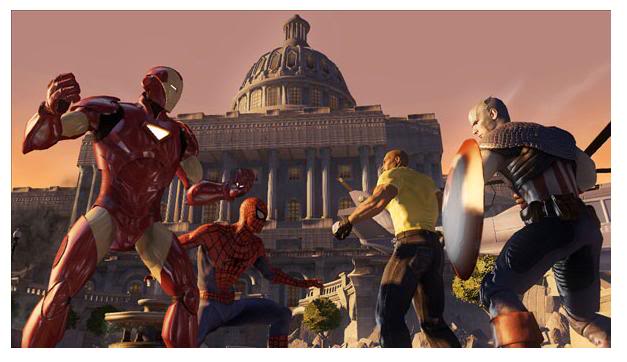
Marvel Ultimate Alliance 2

Following Marvel’s run of great games, DC fought back hard and rocked the boat with Lego Batman: The Videogame. If anyone has played any of the Lego-based games thus far, you know how much fun they are. Simply put, the Lego games bring out the child in all of us, while Lego Batman brought out the fanboy. Mixed characters from all over the Batman universe appeared and made for excellent gameplay.
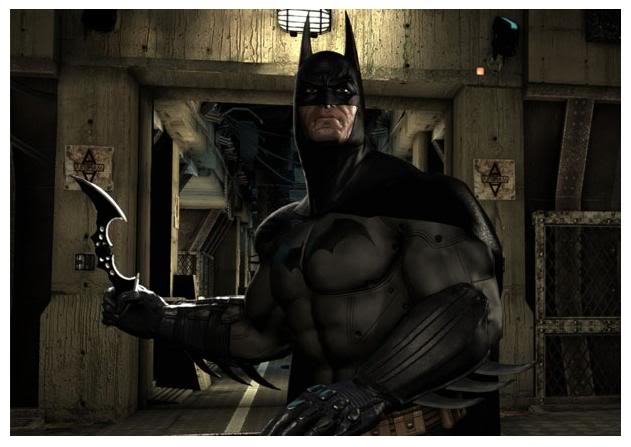
Batman Arkham Asylum

And with DC’s Batman, up next could only be the greatest superhero game in existence: Batman: Arkham Asylum. ‘Nuff said.

With Batman: Arkham City coming out shortly, plus Marvel’s new games, Thor, X-Men Destiny and Spider-Man: Edge of Time coming out, we’ll be riddled with plenty more superhero games and more memories to be made. P.S. Edge of Time is written by X-Factor’s Peter David. I’m really excited for that!

And don’t worry that I hadn’t mentioned EVERY single game out there. I’m purposely forgetting games like X-Men: Mutant Academy, Marvel: Rise of the Imperfects, Marvel vs. Capcom series (as it’s not 100% comic hero), Marvel vs. Street Fighter, Spider-Man: The Movie, Fantastic Four, X-Men Origins, X-Men: Arcade (“Welcome to die!”), Astro Boy, Iron Man: The Movie, plus various X-Men and Spider-Man Game Gear games, etc., solely because they’re forgettable.

Since I can, I suppose my top-five favourite superhero games are as followed:

1. Batman: Arkham Asylum
2. Incredible Hulk: Ultimate Destruction
3. Marvel Ultimate Alliance 2
4. Spider-Man (PSX)
5. X-Men Legends 2: Rise of Apocalypse

What are yours? Did I miss anything really crucial that I should have covered? Am I entirely wrong with some of my discussions? Do I just really suck at The Silver Surfer? Fire some messages below!

Until next time, keep on Space Truckin’.

Oh. And The Fantastic Four. PC. 1985. Don’t you forget it.
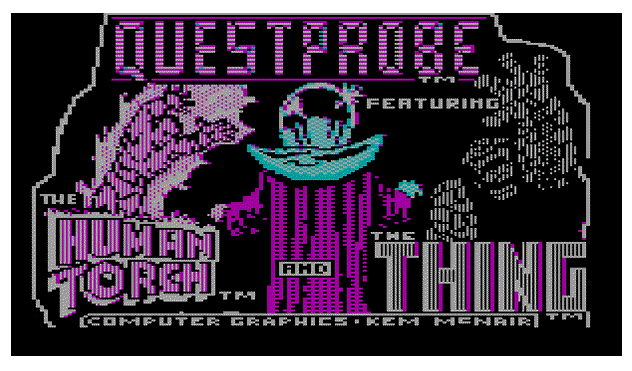
Fantastic Four PC

Classic Comic Special: Comics, Covers, and Barcodes!

I usually use my Classic Comics feature to review a comic book. However, I’m going to do something different and talk comic book barcodes. What are comic book barcodes for? Why do some have pictures of Spider-Man’s head instead of the barcode? How and why did they affect comic book covers of Marvel and DC from the late 70s and early 80s? Let’s delve in.

Barcode Strikeouts

What are those? Let’s take a look!

For comics coming out at a time when technology didn’t move so fast, there had to be assurances for companies like Marvel and DC. But more on that soon.

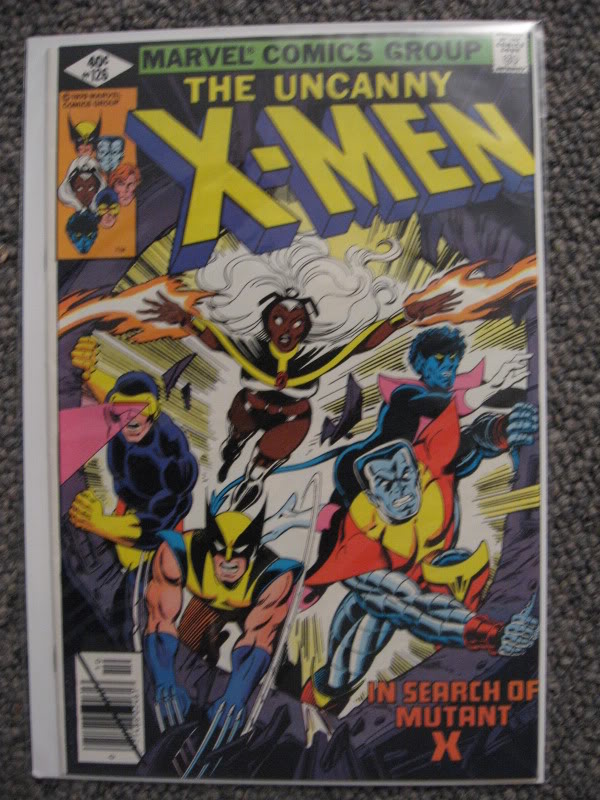
Here’s my copy of X-Men #126 from October of 1979. By all means, I invite you to click on the image to see it larger. Please pardon the quality of my old camera.

XMen

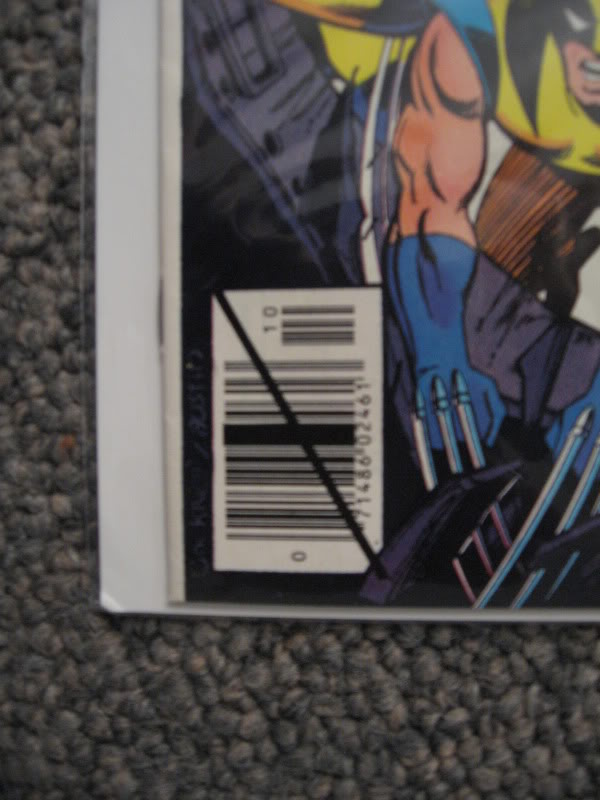
Let’s take a closer look at the bottom-left corner of the comic.

BarcodeStrike

I remember when I first started collecting, I had no idea why someone would put black strikes through the barcodes. Eventually, it dawned on me how the strikes only seemed to have affected a particular era of comics. In fact, the strikes they weren’t drawn on but actually printed over top of the barcode. I wanted to know what it meant (and I’m sure you do too)!

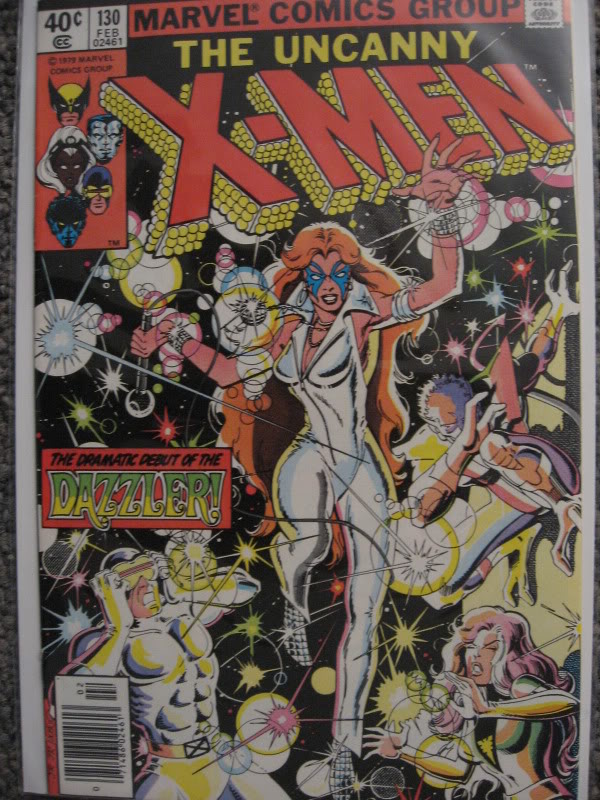
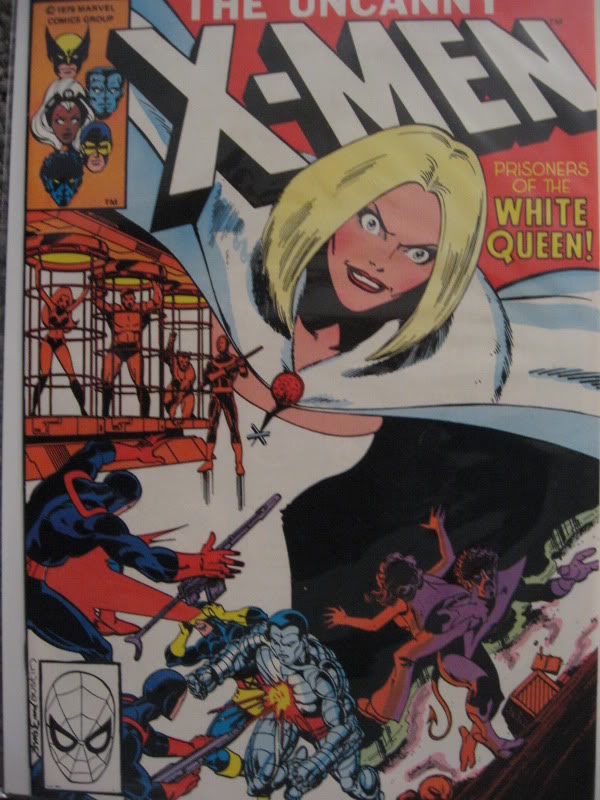
Three of the following X-Men comics I have featured strikes up until X-Men #130, from February of 1980.

XMen

Then issue #131 – a month later – it didn’t have a barcode at all!

XMen

Instead of a barcode, I see. . . a picture of Spider-Man? But I’ve seen issues of X-Men #131 with a barcode! What happened?!

Direct Edition vs. Newsstand Edition

A crossed out barcode means the comic book is a Direct Edition. So what’s that?

In a nutshell, there are two “types” of editions: Direct and Newsstand. A Direct Edition is sent to the comic book store and sold there. A Newsstand Edition is something which a newsstand would carry (seems obvious, right)? However, this was not just exclusive to newsstands, as malls, convenience stores, and drugstores could also receive Newsstand Editions.

A Direct Edition comic is crossed out due to a variety of things. One is because it tracks sales for the publisher, while another reason is to stop the store owner from returning the comics they did not sell. A crossed out barcode means the barcode could not be scanned into inventory for the publisher to accept as a return.

Obviously, that means the Newsstand Editions could be returned back to the publisher.

Arguably, Direct Edition comics are more sought-after because they would have been treated more carefully. They were less likely to have been placed in spinner racks, for example, and more likely to have been bagged and boarded. Direct Editions were also bought by the dealer at a lower price presenting another reason why dealers were unable to return them.

That being said, do you remember The Amazing Spider-Man #36? It was called the “Black Issue” as it was a tribute to the events of 9/11. I personally own a copy of that comic. Comic book dealers would have received one without a barcode on the cover at all. I bought mine at a local variety store which did have a barcode on the cover.

Believe it or not, if you have a good quality copy of that book WITH a barcode, it’s actually WORTH MORE because it is considered rare to find good-quality copies of Newsstand Edition comics. That “rule” really only applies to key issues of books, for the most part. Ultimately, it depends on the buyer.

Interestingly enough, Direct Edition dealers/comic book store owners were usually unable to scan the comics they brought in as most Direct Edition carriers did not have scanners for barcodes at the time. The technology simply wasn’t there yet or was too expensive for the comic shop owner to take on!

Due to the lack of technology from many of the comic dealers, Marvel replaced the Direct Edition barcodes with things like the Spider-Man head, or DC with Batman. On top of that, it was a way to promote extra little tidbits. Who doesn’t remember “50 Years of Captain America”, or “Spider-Man’s 35th Anniversary”? It was printed on every comic where the barcode should be. It made more sense to put those on Direct Edition books anyway as the readers would be more familiar with what’s happening in their comic book universe rather than a random person purchasing a book at a corner store.

Nowadays, since everyone is mostly on par with technology, barcodes have returned and comics just state whether or not they are Direct Editions. For example, here is a picture of Uncanny X-Force #1 from October of 2010. What does it say right next to the barcode?

Until next time folks, keep on Space Truckin’! If you’d like, you can also follow me on Twitter and Instagram!

UPDATE May 18th, 2020 – What if there’s LITERALLY NOTHING to go on?

This barcode blog has certainly been one of the most-viewed pages on my site. I’ve had many people message me both on here or through private messages to help find information on their books and clarify the understanding of barcodes. However, a recent inquiry piqued my interest and prompted me to update this post.

I completely forgot about the comic books that do NOT have barcodes. And no, I don’t mean the Spider-Man head barcodes.

I had Benn from the UK message me. He sent me a couple of photos of his book and its lack of a barcode – and lack of a back page, of all things!

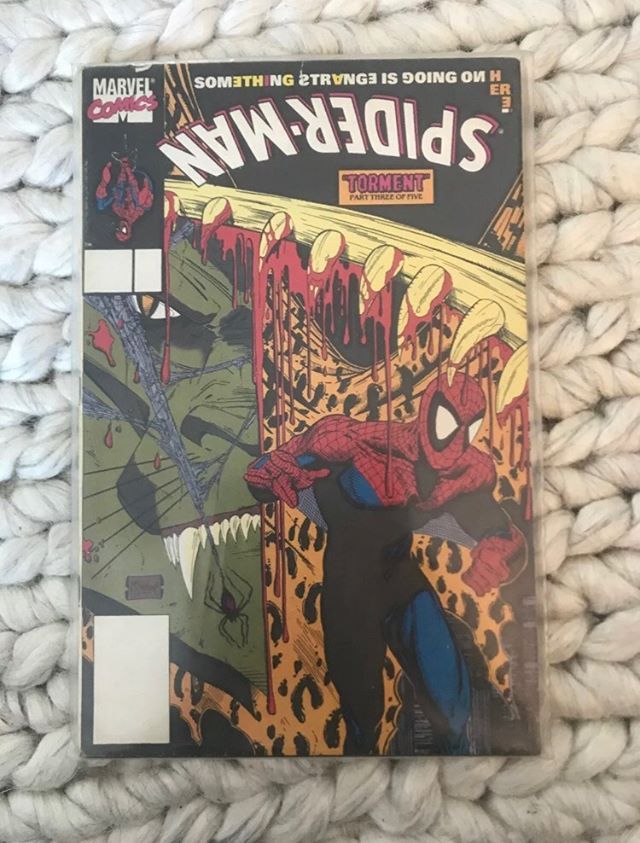
His issue was Spider-Man #3 – from Todd McFarlane’s run. This issue was “Torment Part 3” from 1990.

Looking at the cover, there’s red flags abound! There’s no barcode, no pricing, and no issue number! The information on the book’s cover are entirely stripped away. To make matters even stranger, the background colours are also different.

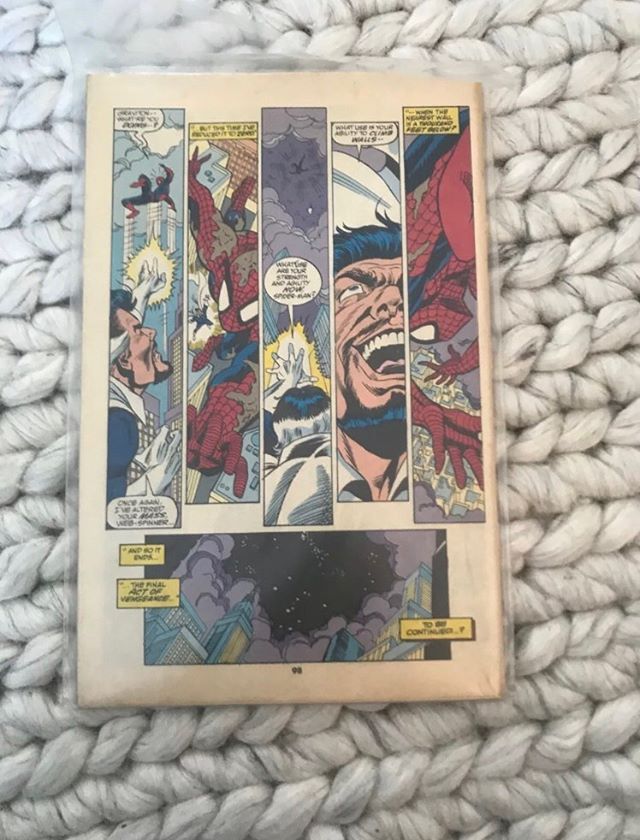
Benn also sent me a photo of the back of the book:

There’s no tearing or obvious removal of a back cover. The staples are intact. If you look closer, the cover actually wraps around to the back page. The book simply didn’t come with a back cover!

What gives? Benn’s book instantly reminded me of a Spider-Man giveaway series we saw here in Canada back in the early nineties.

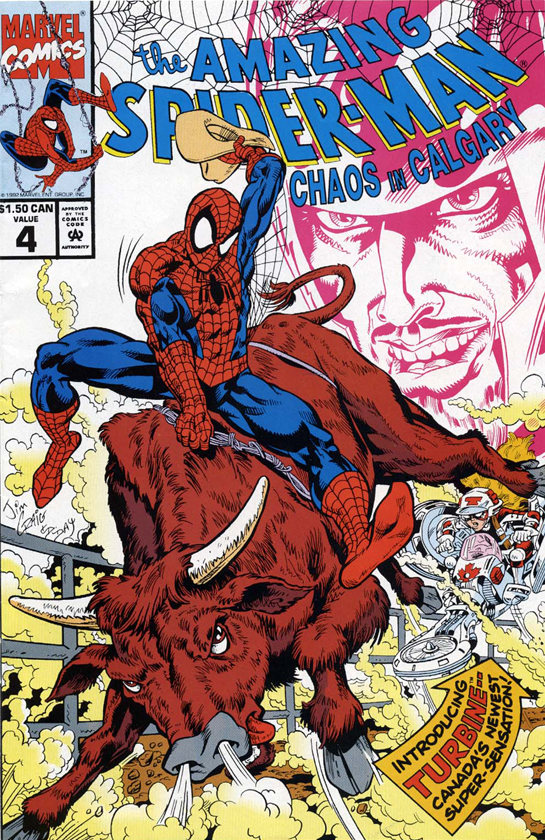
I personally had Spider-Man’s “Chaos in Calgary” and “Hard Ball” issues. They were part of a five-issue Spider-Man promo/giveaway from Marvel which was targeted to Canadians to have them read more Spidey books. Unlike Benn’s book, these books had both their prices and issue number on them. However, there was no barcode at all, let alone a spot for one on the cover.

Based on my prior experience on a few books without barcodes, and because Benn’s book featured a colour variant, I have to assume it was a reprint of some sort. Due to a lack of barcode, it must not have been scanned into stores – similar to the Direct Edition Spidey-head barcodes. I also could not find any information in the Overstreet Guide or Comics Price Guide, as if Benn’s book wasn’t actual “comic books” per se. Without a barcode, if Benn’s book was free or offered as a promotion like “Chaos in Calgary,” it would not get scanned into inventory at all – tracking wasn’t important because the book would have had no inherent value at the time.

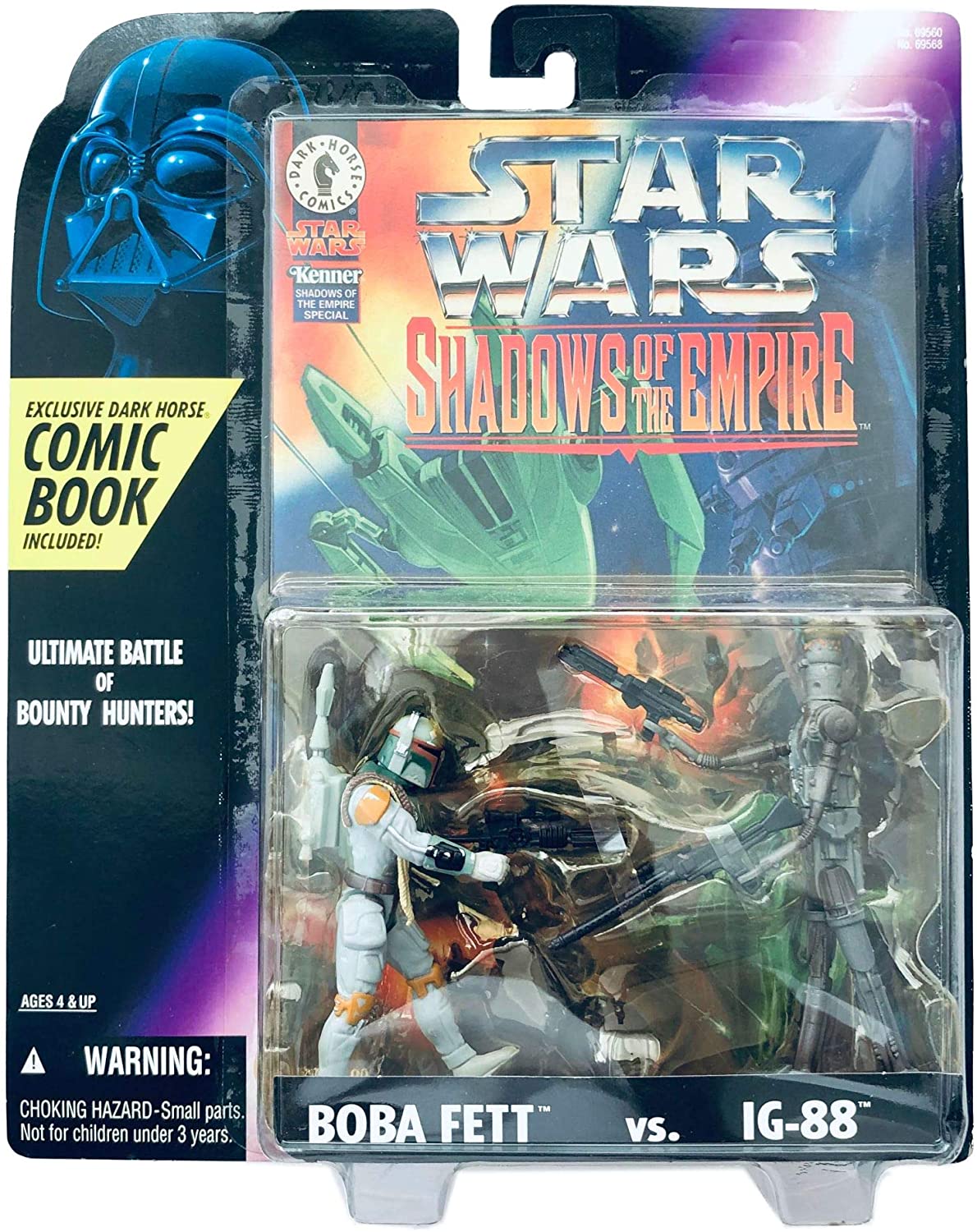
What Benn’s book reminds me of are the Comic Packs of the 90s. I remember one in particular which clearly had no barcode on the cover:

The Shadows of the Empire comic from Dark Horse all but confirms to me Benn’s book would have been part of a toy pack. Like Benn’s book, there’s no issue number, barcode, or price. Unlike Benn’s book however, the Shadows of the Empire book wasn’t necessarily a reprint because it hadn’t been published before. Benn’s book is a reprint for sure, but considering it to be from a toy pack, it may explain the lack of a back cover as the back would have been more expensive to print. The book would not have had a barcode because the barcode was on the packaging of the toy, not the book. It may also explain why I could not find any information of the “book” in either the Overstreet Guide or Comics Price Guide – because this may – and I’m using this term very loosely here – be labelled as a “toy” not a comic.

Personally, I’m not sure what it could be labelled as. Due to COVID-19, I certainly cannot go to any comic book or toy conventions to ask the dealers there.

Benn’s book leaves a lot of unanswered questions with it: was the book actually part of a toy or just a giveaway? Benn’s from the UK and certainly distribution and rules for it would have been different than in the Americas – does that play a factor to why there’s no numbering on it? Would you classify the book as a “toy?” If so, would “Chaos in Calgary” get a pass? Does packaging define the product? I’d argue Benn’s book is a comic book. Looking into the Overstreet guide, it doesn’t recognize Dark Horse’s Shadows of the Empire toy pack books. However, the Comics Price Guide does.

Unfortunately I am unable to offer Benn a true answer to his book. It certainly is a unique piece though! If you know of any action figures that may have sold with Benn’s Torment #3, please let me know!

Happy collecting, everyone!

Wednesday’s Reviews: The Avengers and The Alternate Avengers

Firstly, read Jim Shooter’s blog. It’s absolutely astounding to see what he does and has done. This recent entry is one of the most fascinating ones I’ve read thus far:

Hank Pym was not a Wife Beater

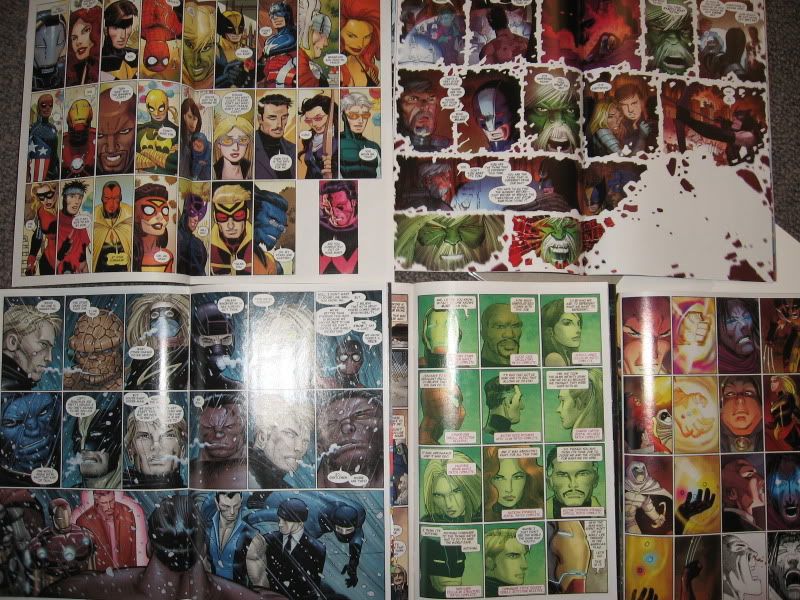
As for reviews, I swear I’m not going to bring this up again – but Bendis & Romita Jr. in The Avengers series have been up to that “multiple panel” deal in their books for the umpteenth. I thought I was going crazy. Then I took a look at Avengers #1, #5, #9, #10, and #11. I left out some half-page ones in other issues because they arguably are the norm for comics.

Panels

This is how I felt after laying all of these comics out:

Bert

Variety is all I’m asking for.

Now on to one of the most anticipated books this month.

Age of X Universe

Age of X Universe #1 of 2
Main Story:Simon Spurrier (writer), Khoi Pham (pencils), Tom Palmer (inks), Sonia Oback (colours).
Spider-Man Story: Jim McCann (writer), Paul Davidson (art), Antonio Fabela (colours).
Joe Sabino (letters), Simone Bianchi & Simone Peruzzi (cover). $3.99

For $3.99, this book is a steal. In fact, it’s an unbelievable steal which will impress every fanboy of the Marvel U.

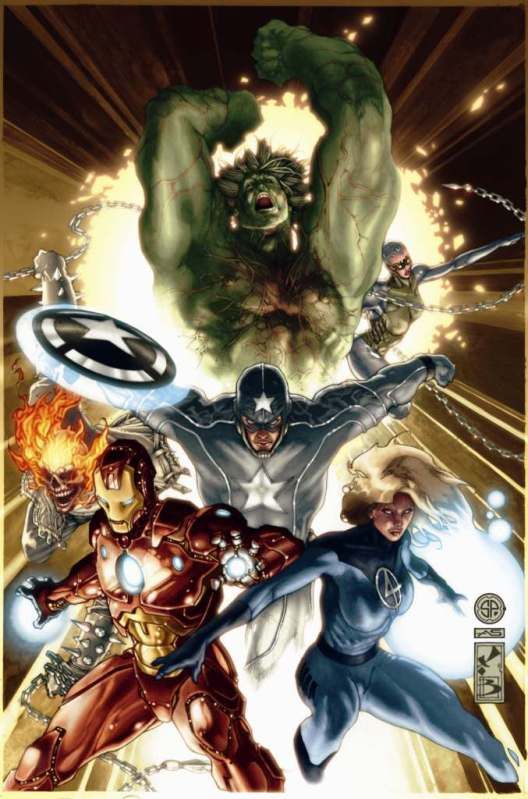
Basing itself off of the current X-Men crossover, The Age of X, AoXU is how the other heroes have been affected by the mutants who are all over the world. Team leader and book narrator, Captain America, leads his unusual strike force of Avengers such as Vengeance, the Hulk, and Sue Storm to a mutant prison riot, to Fortress X itself.

But the excitement lends itself not to the battle, but to the quick back stories of each Avenger – and why they’re there. Throughout the book, we’re invited to see how the world has twisted its ways into the AoXU. Through that, we’re given little tidbits of character leaking themselves out into the page. We see Captain America and Sue Storm have consciences, while Iron Man is a vengeful deteriorating freak of nature and Spider-Woman is the top hit-woman. To top it all off, Frank Castle is the Chief of the Avengers – the man running the show. Of course, that will lead to extremely violent results.

Making things more interesting, forgotten mutants of the Marvel U make short, if not saddening appearances. Maggott, who I haven’t seen alive since 2003, makes a cameo, while Marrow, Mr. Sinister, and Whirlwind make for some extra mutant-loving goodness. (Did I just say that?) Don’t even get me started with Sabretooth’s depressing story.

Khoi Pham does one helluva great job delivering so many jaw-dropping moments in this book. A personal favourites are Vengeance taking on Chamber for a few fiery blazes of panels, and the final page with Hulk and his bug-eyes. My only beef is first in the book with Legacy (Rogue), as she seems rather mannish than well, being Rogue.

To top it all off, a bonus story featuring Spider-Man and a pregnant Mary Jane shows how certain heroes with altered DNA are considered “Post-Muties” – meaning Spider-Man is on the run. A short but enriching tale, we don’t see Spider-Man with his usual quips aside from the introductory narration at the beginning. Concluding on a moment where I’m not sure if I’m happy or sad, Spider-Man’s tale really ties together how perverse the AoXU is.

Regardless if you’re reading the X-Men crossovers or not, you’d be foolish not to pick this up.

Grade: 9/10

Unfortunately I’ve been busy so I cannot really focus on more reviews. Until next time folks, keep on Space Truckin’!

Wedneday’s Reviews: Retcons and Amazing Fantasies

Hey folks! This week, I’m deciding on doing a review-rant. Yes, they can be one in the same.

As I read this week’s copy of The New Avengers #10, I can’t help but be ridiculously upset with how it turned out.

This is about retcons. Although it is getting ever-so-closer to Marvel’s big Fear Itself event, I can’t help but feel driven to DROP this comic due to the over-ridiculousness of this retcon.

For those who are unfamiliar with what a retcon is, in a nutshell, it stands for “Retroactive Continuity.” What that means is one may go back into time and adjust the events of the past to explain what happens in the future.

For a hypothetical example, we’ll take the X-Men. Most people know that Professor X started the X-Men, consisting of Cyclops, Angel, Jean Grey, Beast and Iceman.

Now imagine a new issue of X-Men, where they explain their history, and suddenly there was a new X-Men who was part of the team – but no one ever talked about him because he worked on another island, behind-the-scenes. Then suddenly in the future, that character appears and everyone’s best friends.

That’s retcon. But it’s a part of comics. How can comics from the 60’s, with arguably simplistic origin plots still be relevant in 2011? Well, retcons help with that – and for the most part, they can be very interesting and neat.

In this recent issue of The New Avengers however, I’m down-right disappointed.

The New Avengers

The New Avengers #10
Brian Michael Bendis (writer), Mike Deodato & Howard Chaykin (pencils), Rain Beredo & Edgar Delgado (colours), Joe Caramagna (letters), Mike Deodato & Rain Beredo (cover). $3.99

The issue flips back and forth through timelines between 1959 and the present. Starting off in ’59, we see Nick Fury and Dum Dum Dugan finding Sabretooth in a bar. After mild negotiations, Fury hires Mr. Creed as an Avenger. Yes, Sabretooth.

Fast-forwarding to 2011, and continuing from the previous issue, the New Avengers attack a H.A.M.M.E.R. installation, headed by Superia. Mockingbird is shot, and for most of the issue, we watch our heroes fight off the endless H.A.M.M.E.R. hordes while calling an ambulance for Mockingbird. Literally, that is all that happens in the present.

In 1959, after retrieving Sabretooth, Dominic Fortune, Namora, Kraven, and Bloodstone are hired – all to be “secret” Avengers. Indeed, a league of villains are now Avengers – all before the “official” Avengers team arrives on the scene in 1963.

Leaving on a strong note, we are brought back to the present where rescue vehicles have arrived for Mockingbird, only for Superia to raze the entire ground beneath them. If it wasn’t for comics, Mockingbird would for sure be dead. But we won’t know until next month! Ahhh!

The comic as a whole does not stand out as anything spectacular. As soon as the first villain was hired, I really could not have been surprised to see anyone else be taken in as the idea of this particular retcon ruined any fun I would’ve had with this comic. I digress.

Deodato is on the ball with this issue, penciling all of the present-day moments, while Howard Chaykin focuses on the 1959 plot. Although both are strong artists, I felt as if Chaykin’s style was a bit light for the seriousness of the book. At one part, Mockingbird is splattered in blood while Spider-Man holds her in his arms. The scene is gritty and dark, moody and in despair. The next scene however, we’re brought to a location where shadows disappear and faces are less-serious than prior. Although I greatly enjoy Chaykin’s art, I feel as if it was wrong for this particular issue. And yet his take on Sabretooth was a bit too childish for me, while his Kraven was spot-on.

And after this issue, I’ve concluded that Deodato draws an excellent Thing.

As for the structure of the story, flipping back and forth between fun and sunny places to a battlefield hurt what seriousness the story had. It felt like flipping channels between an intense episode of Law & Order: SVU and Teletubbies. It was sudden with no transition. It simply didn’t work.

Certain dialogue choices by Bendis also took away from the plot. Nonsensical remarks spewing from Thing early on, then to Ms. Marvel versus Superia mindless jabs, and Spider-Man having fun looking for a cellphone to save a life – all of it damaged the intensities of the moments drawn by Deodato. However, with Chaykin’s work, the dialogue seemed more natural. How is this happening?!

Definitely taking a swan-dive, The New Avengers needs to pick up some smart choices in writing and plotting for it to be saved.

Grade: 5/10

Inner-Fanboy Rant

I love comic books as much as I like turtles. In result, retcons are commonplace and something which I should expect from comics. But not since Secret War, have I felt that Bendis did a retcon so over-the-top that I disagree with it.

Now admittedly, the story is not done yet, so who knows where it will go – but I feel as if it’s not going in the right direction. But when you take serious villains – some which are notorious monsters, and put them on a team, you have a problem. And I’m not talking personality issues, either.

If anything, it seems down-right insulting that the first Avengers – regardless of being “official” ones or “secret” ones are the bad guys. That would be literally like suggesting Professor Xavier had a set of X-Men before the actual X-Men came out – it’s absurd and mind-boggling.

Retcons usually have to explain themselves later on, too. Recent retcon’s like with X-Men’s Deadly Genesis, or Spider-Man’s One Moment In Time, worked for me, because they were explained and honestly, could not be as far-fetched as the “powers that be” were involved with Spider-Man’s, while telepathy and clever storytelling was a part with the X-Men’s. With the New Avengers, we’re fortunate that most of the villains are either dead, or haven’t been used in so-long that the retcon does not have to be adjusted in the future. Sabretooth and Bloodstone are dead, while Kraven is dead-but-alive-now-doing who-knows-what. Dominic Fortune has been MIA for years now, and Namora disappeared with the Agents of Atlas since its cancellation – unless I’m wrong with that.

I guess I’m really just disappointed with how this came about. Admittedly, it has TONS of time to sway another way, but I really feel as if this is just going to hurt my faith in The New Avengers for the next little bit.

Amazing Fantasy

Amazing Sale

As a complete side-note, Amazing Fantasy #15 (1962), the first appearance of Spider-Man, as officially reached the million-dollar club with Action Comics #1 (1938, first Superman) and Detective Comics #27 (1939, first Batman).

Amazing Fantasy #15, CGC 9.6 sold for $1.1 million

“The sale of this legendary comic is second only to the Guinness World record 8.5 VF+ Action Comics #1, which marks Superman’s 1938 debut that was also sold by http://www.ComicConnect.com last year for a whopping $1,500,000.” – Comics Price Guide.com

Amazing, eh?

Keep on Space Truckin’!