Comic Books Are Not Cool

“Why don’t you read a real book?”

How many have heard that phrase or variations of it? How many have received even the slightest bit of condescending remarks from friends or family just because you read or collect comics?

I mean, comics clearly are not part of the worlds forté unless it’s in movie form for the most part. For example, this Hallowe’en I dressed up as the Red Skull. I thought it was awesome, because, well I am awesome. I approached a guy at a bar dressed up as Captain America and started talking to him about his costume. After a few minutes, it came down to me blatantly asking him if he knew who I was (in costume form, of course). When I told him, he started at me blankly with a “who?” D’oh! The Captain America movie isn’t out until later this year!

Another friend of mine that night went as the Black Cat. She approached a couple dressed up as Spider-Man and Spider-Girl. Talking to them both, she discovered they had no idea who the Black Cat was. D’oh! Felicia Hardy wasn’t in the movies, so how could they know who she was?

But wait a tick! Why is it okay that they dress up as Superheroes and not know anything about them? Surely the one guy didn’t dress up as Captain America because he saw the not-yet-released movie. And I doubt he was inspired to dress up as Cap after seeing the 1990 movie.

Personal History

I don’t know how many times I’ve been snickered at, or received odd looks from people after I told them I read comic books. Going to university for an English and Professional Writing degree should mean that I read real books, not funny books after-all. Well, I mean, that’s probably what I should be stereotyped as. But I will mention (and plug) that my friend Kyle over at Panel Flow was the only other person I knew in my course who read comics.

However, even predating university, when in elementary school, I grew up around comics and Star Wars. Of course, my peers all thought I was a bit of a nerd, given those were the only things I read on a regular basis.

Yet, when I look back on this past decade, liking superheroes seems to be the cool thing to do – regardless if you actually know anything about them. I even knew people who pretended to be really interested in comic books. They would have a favourite character, favourite book series, favourite super power, and so-on. However, when you would want to talk to the people about your apparent common interests, they would be put on the spot and try to avoid or change the topic. Why would they even bother?

Don’t Believe the Movie Hype!

What I am really just building up to is that comic books seem to be accepted now, unless you read them. It sounds rather ridiculous, but if you really think hard – comic sales for a movie like Iron Man, sell around 50-60k a month. However, the box-office for an individual Iron Man movie easily excels $500 million. If they aren’t buying the comic books, then what drives them to the movies? How do they know about Iron Man? Comic sales have not drastically increased, despite a second Iron Man movie making over $600 million – so what gives?

How are comic movies accepted – but comic books are not? Is there not an irony to this?

Stan’s Soapbox

This whole idea of mine spawned from reading a except of Stan’s Soapbox in Marvel comics during December of 1968:

“The next time anyone puts you down for reading a comic mag, try hitting him with this little soliloquy which I’ve used on various radio and TV guest appearances in the past few months:

Comic books are a medium of communication – just as television and motion pictures are. All three employ words and pictures, and all must be judged on their individual merits. A story is a story, whether presented between two covers or on a screen. If the words have dramatic impact, if the pictures are visually appealing, if the theme is emotionally relevant, then certainly it is worthy of a reader’s attention. However, if the quality is lacking, then it rates little consideration. Isn’t this equally true of a TV program, a Broadway show, a motion picture, or any other form of entertainment? All we at Marvel ask is that our product be judged on the basis of quality – a quality which we sincerely believe is equal to that found in any other comparable media.

Marvel Comics today are produced by the finest creative talent available. Read them first. . . and then decide.

Excelsior!
Smiley”

Although Stan speaks about Marvel, it can easily be argued for any other company. But why are comic books still not considered cool? Why don’t more people read them, and why is there still a stigma attached to them?

I know adults who have seen movies Batman or Iron Man, yet joke to an individual about reading comic books. Are they not the same thing? Do comics in popular culture stop with movies and become stigmatized when they go into paper form?

I don’t know!

It’s a lot to take in. I would LOVE to hear what you guys have to say about this.

Until then, keep on Space Truckin’!

Wednesday’s Reviews: Wolverine, Jubilee and Legacy

A new week with new reviews. There were only a couple of comics out this week, so there isn’t much to review. However, next week, I’ll have my hands tied. With over 15 comics on my pull-list coming out, including the death of a Fantastic Four member, I can guarantee next week will be the most exciting for reviews thus far.

For this week, we got the premiere issue of Wolverine and Jubilee, followed by the on-going X-Men Legacy – the issue before the Age of X.

Wolverine and Jubilee

Wolverine and Jubilee #1
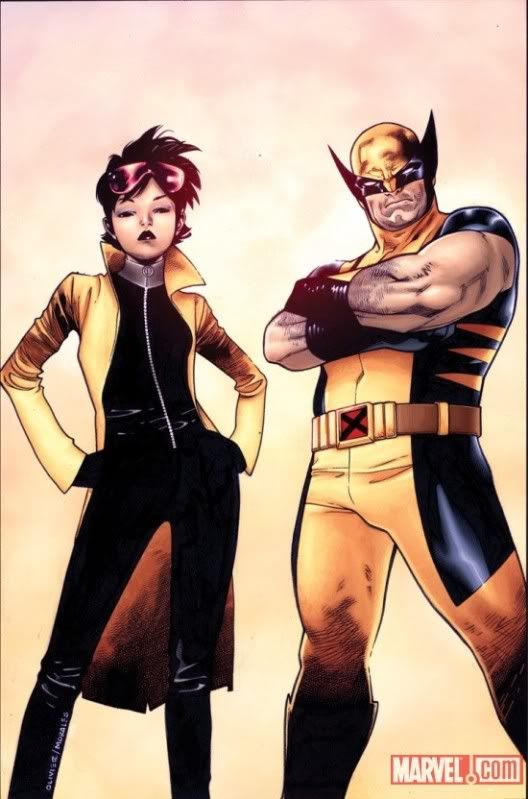
Kathy Immonen (writer), Phil Noto (penciler, inker, colours), Clayton Cowles (letters), Olivier Coipel and Morry Hollowell (cover). $2.99

Falling out of the third series of X-Men comics, Jubilee is now a vampire. With vampirism comes fighting with the thirst, plus multiple anger issues she has to deal with. Due to the lack of a cure, the science team found a temporary fix by inducing her with Wolverine’s blood, thus giving her a small healing factor and blood fix. The book deals with Jubilee integrating herself back into Utopia while other mutants try to help her out. After snapping on a few, she heads downtown and is met by a mysterious woman. By the end of the book, Wolverine and Rockslide find Jubilee in a storage crate littered with bodies.

From front to back, the only thing I could feel was sorry for Jubilee. She lost her parents, then her powers after M-Day, and now has lost her humanity. Quite literally, this is a story of tragedy. Kathy Immonen definitely portrays all the emotions Jubilee feels as she mingles with different mutants on Utopia. Then of course, with Wolverine being Jubilee’s father figure, we’re left to see him try and find ways to make Jubilee feel better, while also trying to defend her against prejudice. Little humour from Wolverine too, such as calling Santo “Sanchez” purposely is subtle enough to be placed in such a serious story and is very welcoming.

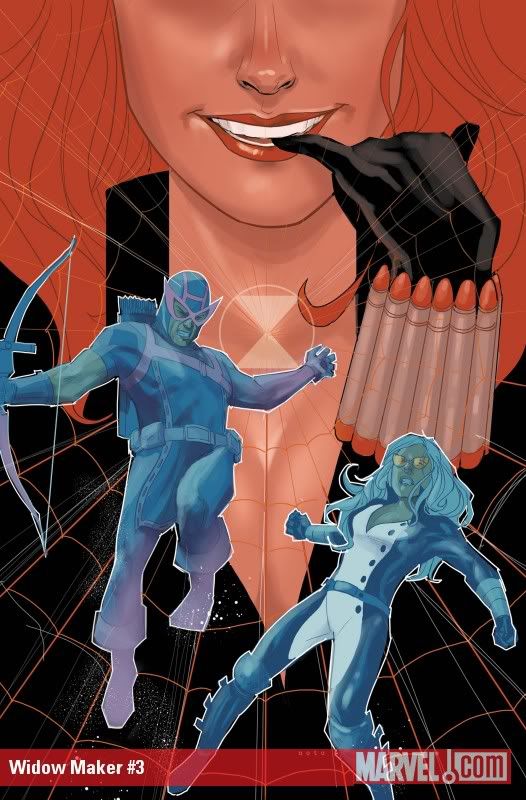
Last week I credited Phil Noto for his excellent cover on Widow Maker #3. Now he has the entire book to himself – doing everything, from inks to colours. His dynamics in this book really excel as sceneries change greatly from underground cells, to a sunset on Utopia, to a night club in downtown San Fan. Quite literally Noto does it all – while still making Jubilee look like an Asian-American. Too often is that forgotten when drawing her. Meanwhile, the cover by Coipel and Hollowell absolutely stuns me. The cover was also talked about in great detail at 1979 Semi-Finalist if you want to see the cover discussed in a bit more detail.

Overall, the story is strongly well-paced and it seems to me like Wolverine really has his hands full already. I really hope the best for Jubilee.

Grade: 8/10

X-Men Legacy

X-Men Legacy #244
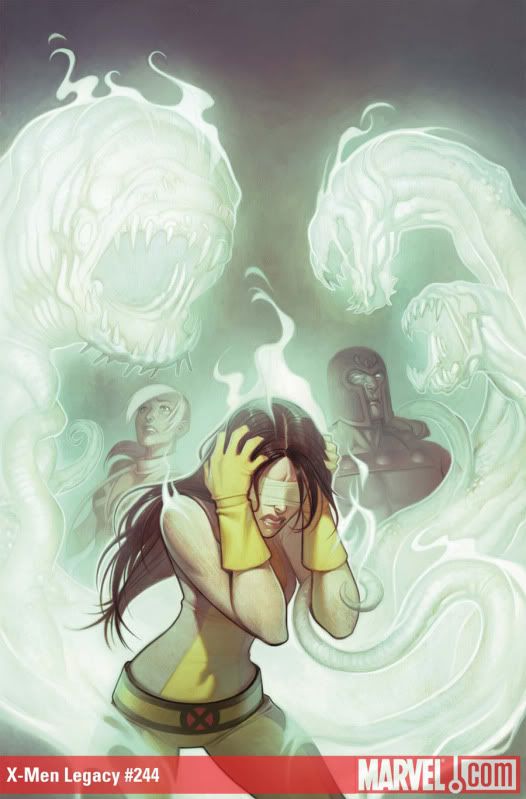
Mike Carey (writer), Harvey Tolibao (penciler), Sandu Florea (inker), Brian Reber (colours), Cory Petit (letters), Joy Ang (cover). $2.99

On Utopia, Blindfold is having bizarre premonitions again. The last time she had ones this bad was before the Second Coming event and led to the ghost of Proteus attacking the X-Men on Muir Island. Fortunately for Blindfold, this time she’s on Utopia with friends. However, Blindfold is not the one narrating the story, and it seems to be someone watching all of the X-Men’s events.

Rogue as the now-undeclared-psychologist on Utopia, talks to Ruth to figure out what it all means. Unsure, Rogue goes to Cyclops, Emma Frost, and Madison Jeffries for help. While Rogue asks questions, Blindfold looks for answers. Eventually, she wanders off and is attacked by a creature left from Emplate’s dimension (back in X-Men Legacy #228). Rogue fights it off and saves Blindfold. However, the narrator of the story seems to fly over Utopia in some massive ship, glared out by the sun. So begins the Age of X.

I’ve always enjoyed Carey’s work. He’s been doing X-Men Legacy for quite some time now – which is before Messiah CompleX (late-2006), so he’s really sure on a ton of characters. Rogue has been the main focus for him for the past twenty-or-so issues, and he’s still doing an excellent job with her. She’s still refreshing to read about and speaks with everyone on Utopia. But given how the last-issue ended, I’m surprised this was not more about Hellion. With Blindfold’s unanswered questions, I’m left confused on what Age of X really is, thus leaving me with confusion. I am unsure of that’s a good thing.

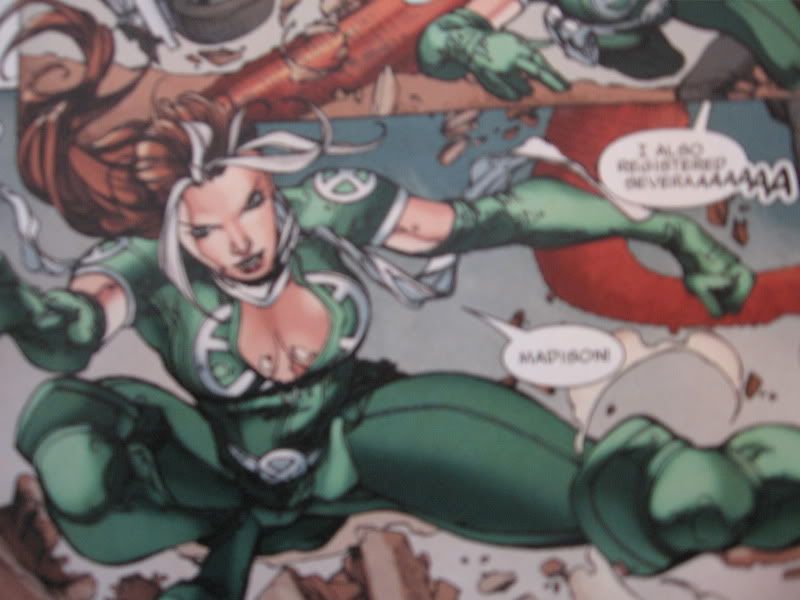
Paul Davidson has been replaced with Harvey Tolibao for pencils and the quality level is noticeably different. Although Davidson is not a bad artist, Tolibao’s details and many full-body shots definitely ups the action in the story. However, Rogue’s breasts are again the focal point for many panels. I do not know why she would even wear a jacket like she does. To top it all off, is Rogue wearing grease on her breasts? I mean, there’s literally shiny reflections off of those things. It’s absolutely bizarre.

Bright colours by Reber are definitely welcomed. I do not even recall when I’ve seen so many bright colours on a page. Rogues green is really green. The demon in Gambit is really menacingly grey. Emma Frosts lips are. . . black? Okay, so there’s a few things which seem off, but mostly, the colors are jaw-dropping. Page 5 and 6 are really great from an inker’s perspective with everything properly balanced.

It wouldn’t have been a bad kick-off for the Age of X if I knew what was going on. Oh, and breasts don’t glitter.

Grade: 5/10

Next week! Keep on Space Truckin’! No wait.

Seriously. What the hell is going on here? Where did she get that grease from?

Rogue One

Rogue Two

Oh, and pardon my camera.

Wednesday’s Reviews: The Incredible Widow Maker

This week wasn’t a big week for comics. Neither will next week. January lull, I assume. Then again, come the 26th, I’ll be overwhelmed with comics. Until then, this week we have Chaos War continuing in The Incredible Hulks #620, while the identity to Ronin is revealed in Widow Maker #3.

Incredible Hulks

The Incredible Hulks #620
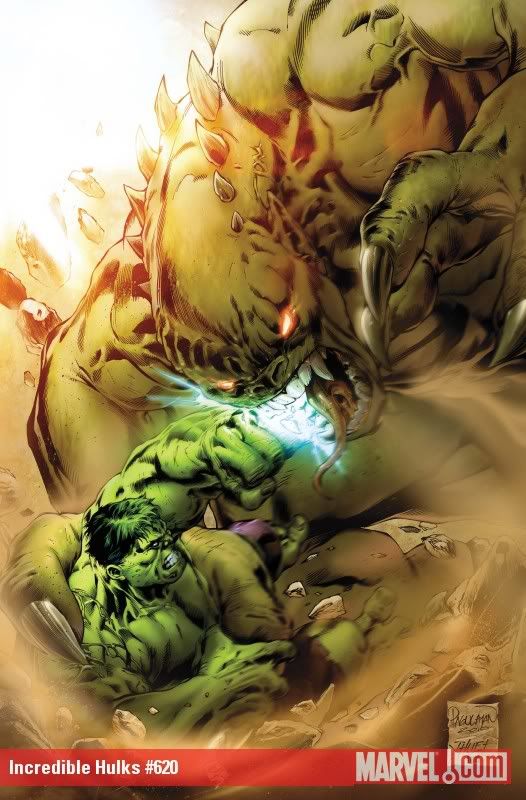
Greg Pak (writer), Paul Pelletier (penciler), Danny Miki (inker), Paul Mounts (colours), Simon Bowland (letters), Paz and D’Armata Pagulayan (cover). $3.99

Chaos War crushes on in The Incredible Hulks story. In last issue, the Hulks took on Abomination, Demon Zom, and the Hulk’s father as the Chaos King rises the dead to kill A-Bomb’s ex-wife, Marlo, as she recently gained powers of Death (long story). Fortunately for the Hulk, he has people in life who come back, thanks to Marlo. Doc Samson, Glenn Talbot, as well as his ex-wife Jarella appear to aid in the fight.

Surprisingly, with all of the action happening in this comic, there is a great amount of relationships between every character. Although the primary story is focused between Hulk and his father, little snippets of feelings from A-Bomb and Marlo, to Hulk with Jarella, and Betty with Talbot, all get attention in the story. Albeit minor, the dialogue they share is significant enough to really generate some empathy from the readers. Pak’s balance of characters really shines through. A powerful scene with all of the Hulks lined up against Hulk’s father stands as a powerful statement that Hulk really does have a family now.

Pelletier makes good use of full-page spreads with many scenes of action taking over multiple pages and generating a feel of strength with the Hulks. And I do not mean physical strength. Tied in with Mounts’ excellent mixes of greens and “death” red colours, this book was a surprise hit – tackling a lot in one book.

Grade: 7/10

Widow Maker

Widow Maker #3 of 4
Jim McCann (writer), David Lopez (penciler), Alvaro Lopez (inker), Nathan Fairbairn (colours), Cory Petit (letters), Phil Noto (cover). $3.99

With the first two stories leading a tremendous build up of who Ronin is, this story does not disappoint. Our three heroes, Black Widow, Hawkeye, and Mockingbird, with mercenary Dominic Fortune, finally discover the secret of Ronin. Not only that, our dynamic relationship duo – Hawkeye and Mockingbird – seem to be on good terms again. Near the ending of the book, Ronin’s identity is releaved, and as are his ultimate plans for domination. Leaving the book with our heroes entirely overran with villains, it’ll be interesting to see how the story concludes itself.

Despite the surprise twist with Ronin’s identity, the story ends up falling a bit flat on a few different levels. Firstly, the characters, while all having a history together – never touch upon it. You would figure the first part of the book featuring Hawkeye and Black Widow alone would feature much more interesting dialogue. Dominic’s only place in the book now, it seems, is to be comic relief as he only adds in funny dialogue when there seems to be nothing else to say – which is surprising, considering Hawkeye is supposed to be the funny one. By the end of the book, Ronin also gives away his “ultimate plan” in a stereotypical villain rant which we’ve seen in every cartoon series known to man.

But despite the books short-comings, the Lopez’s and Fairbairn pick up the pieces with nice colours and tons of action. Albeit, there was a few panels which were questionable: Some faces changed in quality depending on the panel, while one particular scene with Black Widow has her suit zipped right up before battle. The very next panel, her suit is zipped down, suggesting cleavage helps fighting gifted ninja girls. Yes, I did say that. But all aside, the art was solid and the story definitely only needed to be four issues long.

Grade: 5/10

Until next time, keep on Space Truckin’!