Pokémon GO & Growing Up as a Nerd in the 90’s

With the new release of Pokémon Go seemingly affecting everyone’s lives and social media platforms (which arguably are the same thing to some folk), it always surprises me when I see something from my childhood come back into the mainstream. That’s not to say Pokémon ever went away. There are still new movies, new toys, and of course the online sensation known as TwitchPlaysPokémon which went all over the news which also introduced lots of people to the streaming service Twitch. This also happened with the Twitch Bob Ross marathon, but I digress.

I grew up in the 90s. I was born in the mid-80s, letting me absorb the cool TV shows that survived the end of the 80’s era: GI Joe, Transformers, Dino Riders, and Denver the Last Dinosaur were only a few of the many shows that trickled over into the 90s with me.

I was pretty obsessed with dinosaurs as a kid. I wanted to be a palaeontologist when I was in grade three and wrote cool stories featuring both dinosaurs and Transformers in my English classes. Why I never considered just writing about the Dinobots – I’ll never know. I collected rocks and went through the gravel in neighbours driveways to look at the imprints of trilobites or plants within them. It was really fascinating to me.
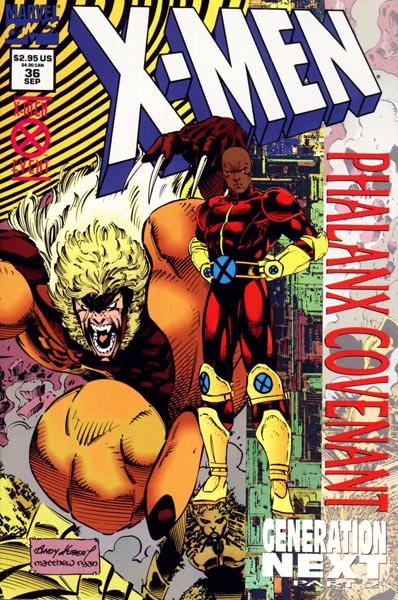
Ah, my first comic book.

In the early-90s, I stumble across a animated TV show called The X-Men on FOX Kids. There was also Spider-Man, Batman, Iron Man, Fantastic Four, The Tick, and a short-lived Hulk series that I also enjoyed. I picked up my first comic book, X-Men #36, in 1994 when I visited a local convenience store. I recognized Sabretooth from the cartoon. The book also featured Jubilee – who I also knew from the show – as well as having a gatefold cover which caught me up with what was going on in the series. I recognized a lot of the X-Men on there. I felt like I was in the loop!

Coming to the mid-90s, some kids my mom babysat brought over this three-part movie series on VHS called “Star Wars.” Needless to say, that changed my life in a dramatic fashion. No longer did I want to dig up old dinosaur bones: I wanted to fly into space, maybe meet the Shi’ar Empire, fly an X-Wing, and so on. You know, the usual stuff kids dream about doing.

But as with everything, there comes a price.

I was a scrawny kid. I had asthma, acne, allergies – the works. All I ever wanted to do was talk about Star Wars and read comic books. It’s quite typical to look back and think that’s all kids in the 90’s wanted to do. If they weren’t doing that, they were playing video games. Let’s not forget that great pastime. I especially played the non-sport games or popular games from franchises. NHL series? Nope. Zelda? No time! At least Super Mario? I certainly played those games to death but would easily prefer games on a different “console” – the PC. SimCity 2000? Totally. X-Wing? I still have all five floppy discs! Command and Conquer? My ion cannon was ready!

While everything I wrote above gives you a good idea to what kind of kid I was, it was definitely not considered “the norm.”

I remember in grade seven on May 4th (years before the “Star Wars Day” even existed), my grade seven teacher wrote on the chalkboard “May the Fourth be With You.” I distinctly remember arriving early to class that day before both the teacher and the majority of my fellow classmates came in. I saw those words on the board, and I nearly cried in embarrassment. I ran up to the chalk board and erased everything that was written. I went back to my seat while the few other students didn’t say anything about my actions. When class started and the teacher arrived, she asked why her message was erased. Once I was ousted as the culprit, she asked me why I did what I did. I shyly shrugged my shoulders. She was good enough to accept the answer and move on with the day.

She understood why I did it: I was picked on a lot as a kid. Star Wars wasn’t cool. I wasn’t into the same things the rest of the students were: MuchMusic (Canada’s version of MTV), WWF, sports, hanging out with each other after school. . . it just wasn’t me. While I did participate in after-school sports, I wasn’t considered “cool” enough by my peers for a variety of other reasons. I still had no idea what music they were talking about, what movies they went to see together, and what games they were playing. I had my own world with my own interests.

I was often bullied and usually made fun of for my indulgence of the things I enjoyed. However, I eventually became a bit numb to it and ended up wearing it like a badge of honour. In my grade eight yearbook, my nickname was “Star Wars Fan” as the teacher opted not to have “Freak” put into the book. Good call, grade eight teacher. Good call.
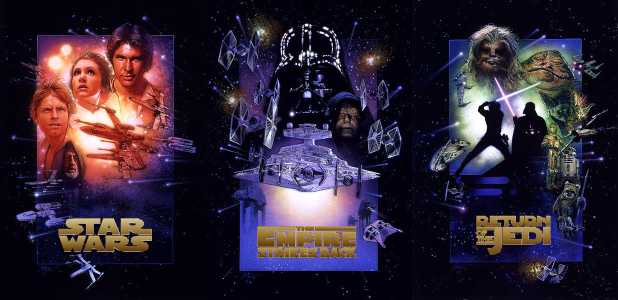
1997 saw a lot of changes such as Greedo shooting first.

So you can see how looking upon the fads now, I’m a bit surprised by how popular all of these things are. While sure, Star Wars is definitely one of, if not, the most popular film franchise of all time, there was a period when it was completely not cool to like it. I know that because I lived it.

With Return of the Jedi’s release in 1983, there was no new Star Wars until 1999. That’s a long period of time for something to be removed from popularity. While the 1997 Special Edition release brought the series back into the spotlight my fellow peers didn’t care, but my excitement and intensity over the films only increased. Newer toys were being released which I bought up with my paper route money.

I remember trying to talk to someone in my grade eight class about a few toys I had purchased. Their response? “You could’ve used that money to buy a car.” I was laughed at by a few of the other students. I was thirteen. Star Wars was what made me happy. I’m sorry I didn’t watch Party of Five or 90210. I was busy watching Nova on PBS. Besides, I wasn’t even old enough to drive.

Even as I began to discover music, I found myself starting to enjoy both progressive rock and heavy metal. It was complex stuff that shunned away the masses but really drew me in. As with heavy metal music, it is a purposeful insular culture that gives the middle finger to the establishment. And for me, that establishment was the two Catholic schools I attended and the rest of the people who didn’t understand me.

By that time as well, I was in high school and I had stumbled across a PC game called StarCraft. Even to this day, I watch professional StarCraft as my “sport” of choice. I don’t and never have followed popular sports. But I do follow the eSports scene.
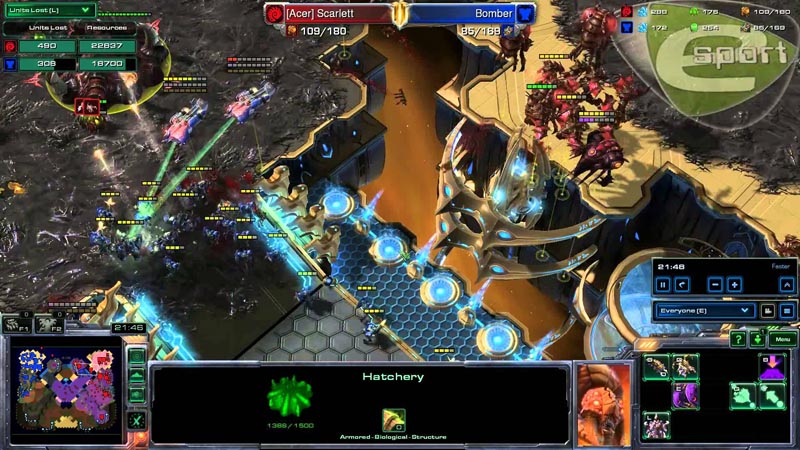
Game 3 of Scarlett vs. Bomber during Redbull Battlegrounds.

With all that being said, you can imagine seeing the rise in popularity of comic books, their respective movies, and other nerd culture being highlighted in the media – how someone like me can feel a bit overwhelmed and if not sometimes feeling like a bit of a shut in.

However, now some friends and family will come to me to ask me questions about comic book character X, or ask me about the Star Wars Expanded Universe (or Legends as it’s now called). Suddenly the ridicule for the things I enjoyed for the first sixteen years of my life was to be forgotten: my interests were in the spotlight and as collateral had it, so was I.

But I wasn’t, and still at times, am not ready for it. It’s just seems strange to see people freak out over Pokémon Go now when I still talked about Pokémon exclusively with my younger brother when I was in grade ten because I didn’t know anyone else who was interested in it (shortly after I found, and still have, some long-time and close friends who I can nerd out with). Even look at the Mystery Science Theatre 3000 Kickstarter that BROKE records. While I am super happy for MSTies everywhere, it was only myself and two other friends who watched the show religiously, making it a surprise for me to see the revival actually happening. How didn’t I know so many other people liked it? Where were these people in my life growing up?

Now when the big comic book movies hit the theaters, I’m allowed to be myself in public and indulge in the culture I was once made fun of for indulging in before. When I’m at work, I’ll see a customer with a comic book movie shirt on and talk to them about it. They may not be fans of the comic books, but that’s okay! It’s great to finally be able to have the conversation without getting made fun of.
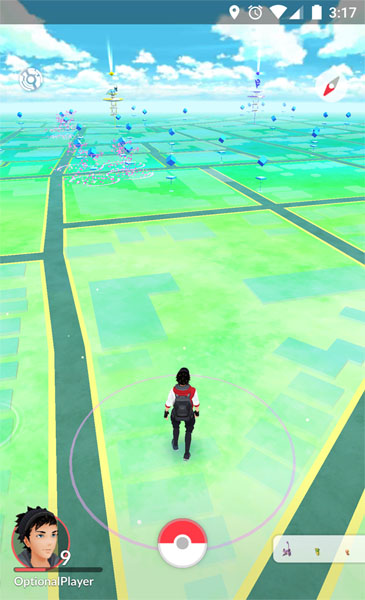
I'm actually level 15 now.
I’m actually level 15 now.

As irony would have it, I was out playing Pokémon Go with a friend the other night. We were only two out of about 150 people in the downtown core playing at a couple of close proximity Pokéstops. Five kids, I’m guessing ages 7 to 10, rolled up next to us on their scooters and bikes, looking out to the crowd of 15-35 year olds playing Pokémon Go. Their response? “Pokémon Go is THIS popular? What a bunch of losers!” they said out loud.

While everyone ignored them, my friend and I laughed as they rode away in disbelief. It was certainly something wonderful to see that despite all of the diversity and ridicule one may have had growing up, I looked out upon this group of Pokémon Go’ers and felt right at home.

In another instance this week, I spoke with a lady in her late-forties and joked with her about the game – not revealing that I play it. She said, in all-seriousness, “If I catch my son playing the game, I’ll kick his ass.” Her son, she admitted, is twenty-seven years old. Fortunately I was mature enough to simply let the conversation bounce off of me and not feel concerned about what she thought (and unfortunately I wasn’t in a position to correct her at the time).

So in one instance there’s a mother bullying people younger than her over the game, while in another instance those young kids who looked down upon my friend and I would’ve been the same kids to do that to me when I was their age.

While some things will never change and crappy kids and adults will always exist – one thing is for certain, if not a bit clichéd: enjoying what you do – regardless of popularity – is important. Life does get better.

Remember my grade seven teacher who wrote “May the 4th be With You” on the chalk board? Later in the day she did come to me in private before recess and apologized for unintentionally offending me. She knew how I felt and it was really one of the only times in my grade school years I felt someone outside of my family actually get what I was going through. I know this because here I am in 2016 still remembering that very simple gesture from all those years ago. I can only hope that more people are like that to children today. Empathy is a wonderful thing.

Now if you’ll excuse me, I have to go catch some Pokémon with some friends.

Until next time, keep on Space Truckin’!
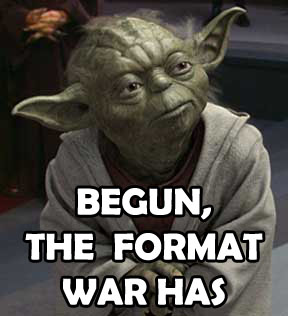
The Format Wars

A short while ago in a novel pretty darn close to home. . .

The Format Wars
Episode I
My Novel

It is a period of civil war. Curved quotations (“ ”),
striking from my word processor, have won their
first victory against my novel.

During the writing, straight quotations (" ")
sporadically appeared, creating a difficult
editing process. Teamed with inconsistent
hyphen lengths (- en dash) (— em dash), when
sentences are broken up, editing difficulty ensues.

Pursued by a drive to make things perfect,
UncannyDerek races to format the book
aboard his computer, custodian of the
novel, that can finally be published to
restore semblance in his life. . . .

Format Wars

But Really

I originally had wrote my novel in one font. While changing fonts while editing, I somehow overlooked how the quotation marks and apostrophes. Apparently not all of the quotation marks and apostrophes change when you “Select All” and change the font. It’s quite a bugger. So I’m going through my novel line-by-line AGAIN to make sure it’s all consistent.

When you self-publish, there’s no one to fix these issues for you. You have to do them yourself. I’ve spent most of my day going through my book to change them over, but my eyes can only take so much!

Another thing I foolishly missed was the dashes, or hyphens, while writing. There are two different types of them (as shown in my opening scrawl). I have to make sure they’re consistent too.

Ah, the little things to focus on before the book hits the printer.

Let my folly be a lesson for you all!

And for the record, I’m using curved quotation marks for my novel and so should you.

Don’t forget to follow me on Twitter!

Keep on Space Truckin’!

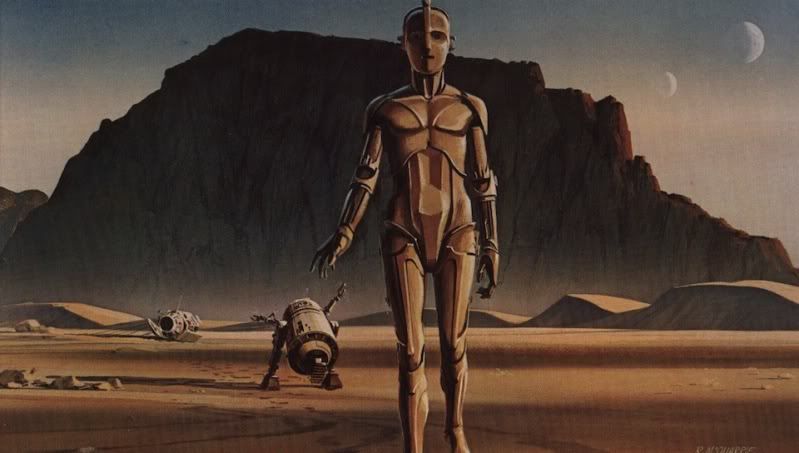
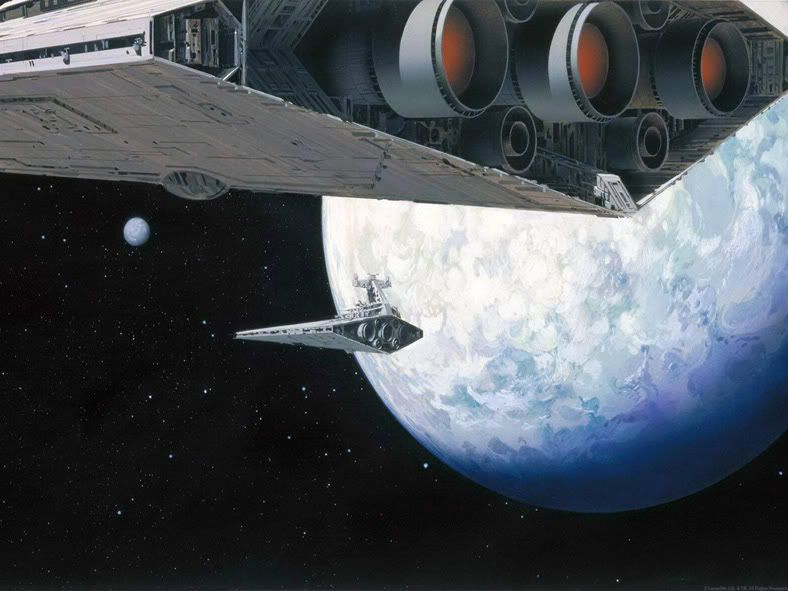
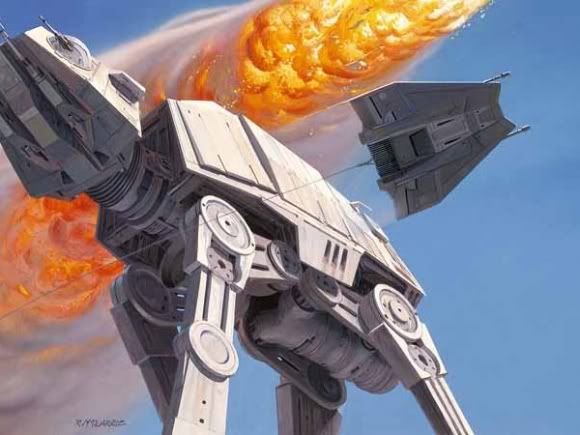
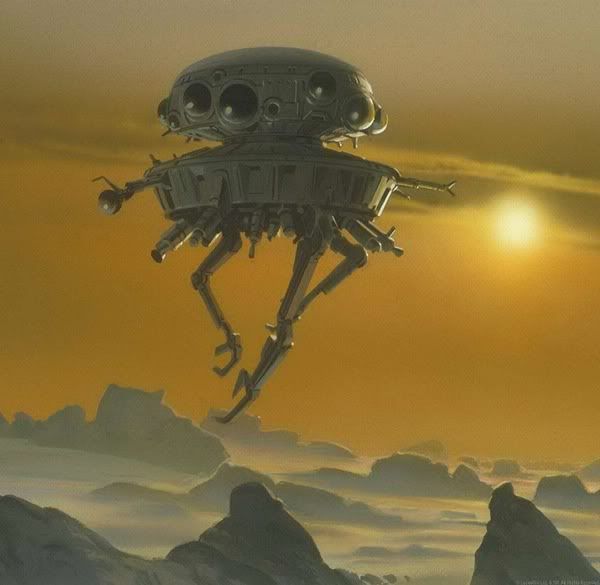
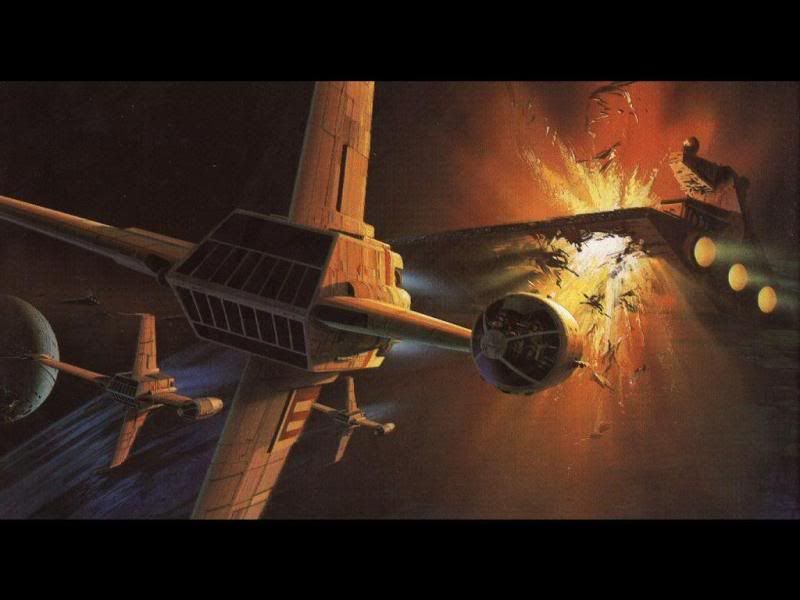
Ralph McQuarrie Passed Away

On Saturday, the legendary artist Ralph McQuarrie passed away at the age of 82.

In case it wasn’t known, I’m a HUGE Star Wars fan. It’s literally a part of my everyday life – somehow. I have to thank Ralph McQuarrie for that.

He helped George Lucas created and define the worlds and characters that existed in the Star Wars universe.

When Star Wars Special Edition came out in 1997, my mom purchased a book for me called “The Art of The Empire Strikes Back,” where I first got a glimpse into McQuarrie’s mind. I was completely stunned by his artwork and grand designs for well. . . everything! I couldn’t help but think, “I want to draw like him!” and “How did he come up with these ideas.” I was ten years old when I was completely blown away by McQuarrie’s works.

Today, I’m still floored by his works. When news of him passing came out, the internet flooded with praise, tributes, and thanks for everything he’s done. Most of the tributes featured tons of his art – some which I had never seen before. My jaw still drops to the floor when I see it.

McQuarrie was a man ahead of his time. In fact, he was ahead of all of us. Words can not describe how impacting his influence was on me. Ralph McQuarrie defined my childhood for me. He will be sorely missed.

Rest in peace, sir.

Classic Comic Special: Comics, Covers, and Barcodes!

I usually use my Classic Comics feature to review a comic book. However, I’m going to do something different and talk comic book barcodes. What are comic book barcodes for? Why do some have pictures of Spider-Man’s head instead of the barcode? How and why did they affect comic book covers of Marvel and DC from the late 70s and early 80s? Let’s delve in.

Barcode Strikeouts

What are those? Let’s take a look!

For comics coming out at a time when technology didn’t move so fast, there had to be assurances for companies like Marvel and DC. But more on that soon.

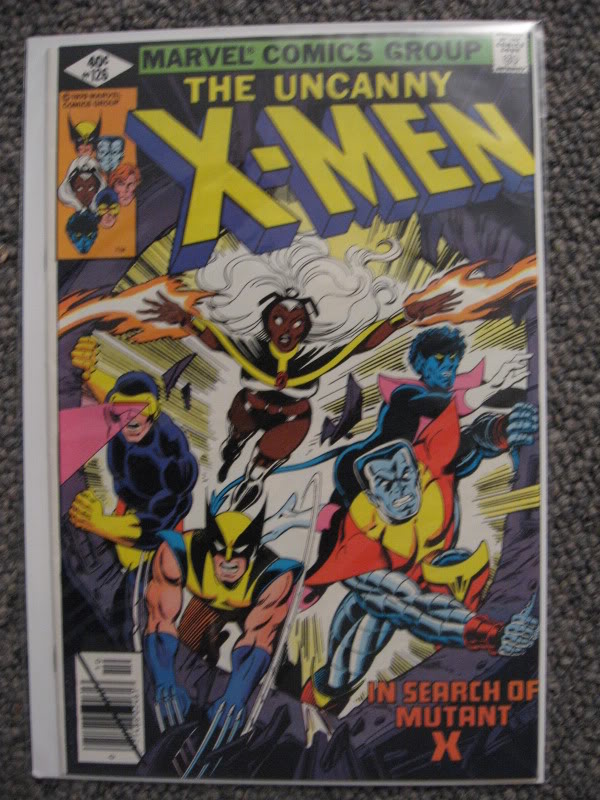
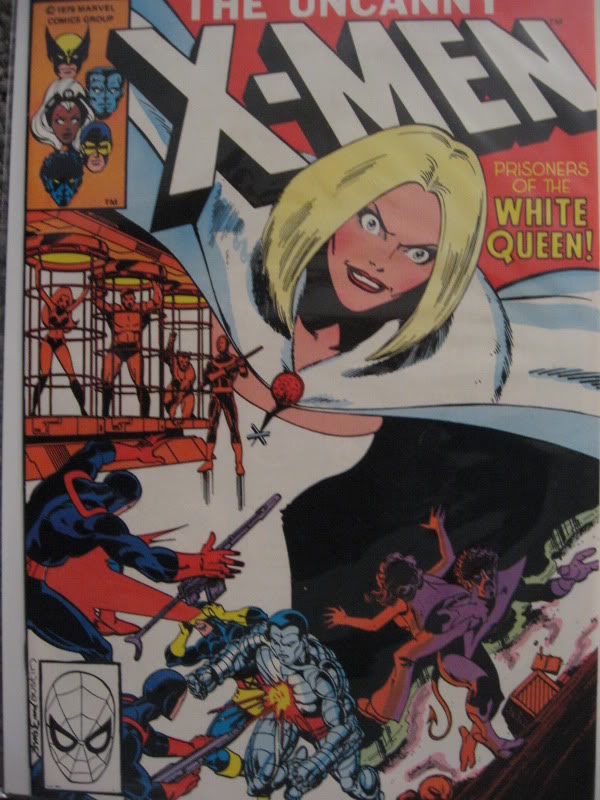
Here’s my copy of X-Men #126 from October of 1979. By all means, I invite you to click on the image to see it larger. Please pardon the quality of my old camera.

XMen

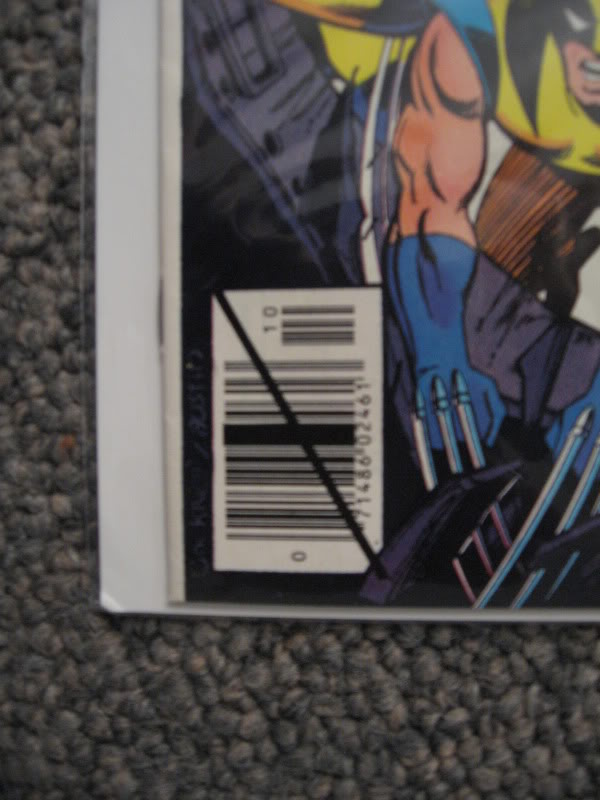
Let’s take a closer look at the bottom-left corner of the comic.

BarcodeStrike

I remember when I first started collecting, I had no idea why someone would put black strikes through the barcodes. Eventually, it dawned on me how the strikes only seemed to have affected a particular era of comics. In fact, the strikes they weren’t drawn on but actually printed over top of the barcode. I wanted to know what it meant (and I’m sure you do too)!

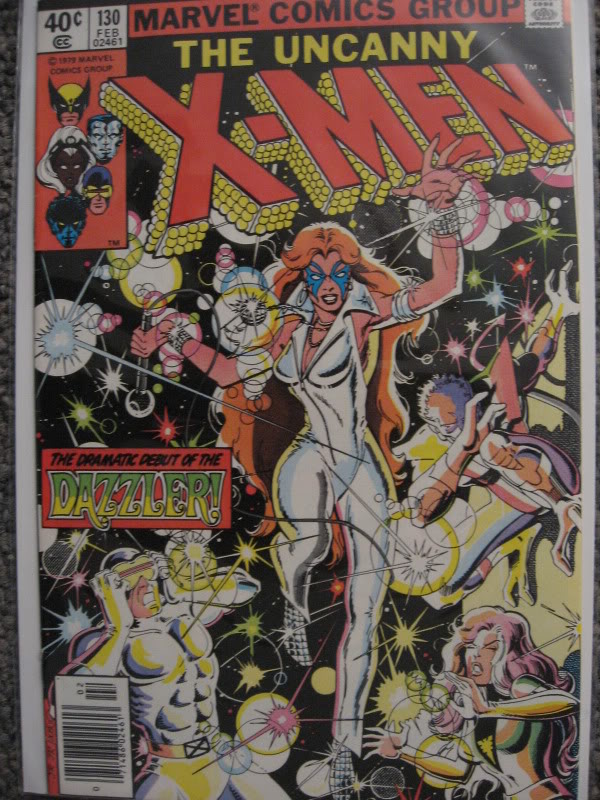
Three of the following X-Men comics I have featured strikes up until X-Men #130, from February of 1980.

XMen

Then issue #131 – a month later – it didn’t have a barcode at all!

XMen

Instead of a barcode, I see. . . a picture of Spider-Man? But I’ve seen issues of X-Men #131 with a barcode! What happened?!

Direct Edition vs. Newsstand Edition

A crossed out barcode means the comic book is a Direct Edition. So what’s that?

In a nutshell, there are two “types” of editions: Direct and Newsstand. A Direct Edition is sent to the comic book store and sold there. A Newsstand Edition is something which a newsstand would carry (seems obvious, right)? However, this was not just exclusive to newsstands, as malls, convenience stores, and drugstores could also receive Newsstand Editions.

A Direct Edition comic is crossed out due to a variety of things. One is because it tracks sales for the publisher, while another reason is to stop the store owner from returning the comics they did not sell. A crossed out barcode means the barcode could not be scanned into inventory for the publisher to accept as a return.

Obviously, that means the Newsstand Editions could be returned back to the publisher.

Arguably, Direct Edition comics are more sought-after because they would have been treated more carefully. They were less likely to have been placed in spinner racks, for example, and more likely to have been bagged and boarded. Direct Editions were also bought by the dealer at a lower price presenting another reason why dealers were unable to return them.

That being said, do you remember The Amazing Spider-Man #36? It was called the “Black Issue” as it was a tribute to the events of 9/11. I personally own a copy of that comic. Comic book dealers would have received one without a barcode on the cover at all. I bought mine at a local variety store which did have a barcode on the cover.

Believe it or not, if you have a good quality copy of that book WITH a barcode, it’s actually WORTH MORE because it is considered rare to find good-quality copies of Newsstand Edition comics. That “rule” really only applies to key issues of books, for the most part. Ultimately, it depends on the buyer.

Interestingly enough, Direct Edition dealers/comic book store owners were usually unable to scan the comics they brought in as most Direct Edition carriers did not have scanners for barcodes at the time. The technology simply wasn’t there yet or was too expensive for the comic shop owner to take on!

Due to the lack of technology from many of the comic dealers, Marvel replaced the Direct Edition barcodes with things like the Spider-Man head, or DC with Batman. On top of that, it was a way to promote extra little tidbits. Who doesn’t remember “50 Years of Captain America”, or “Spider-Man’s 35th Anniversary”? It was printed on every comic where the barcode should be. It made more sense to put those on Direct Edition books anyway as the readers would be more familiar with what’s happening in their comic book universe rather than a random person purchasing a book at a corner store.

Nowadays, since everyone is mostly on par with technology, barcodes have returned and comics just state whether or not they are Direct Editions. For example, here is a picture of Uncanny X-Force #1 from October of 2010. What does it say right next to the barcode?

Until next time folks, keep on Space Truckin’! If you’d like, you can also follow me on Twitter and Instagram!
UPDATE May 18th, 2020 – What if there’s LITERALLY NOTHING to go on?

This barcode blog has certainly been one of the most-viewed pages on my site. I’ve had many people message me both on here or through private messages to help find information on their books and clarify the understanding of barcodes. However, a recent inquiry piqued my interest and prompted me to update this post.

I completely forgot about the comic books that do NOT have barcodes. And no, I don’t mean the Spider-Man head barcodes.

I had Benn from the UK message me. He sent me a couple of photos of his book and its lack of a barcode – and lack of a back page, of all things!

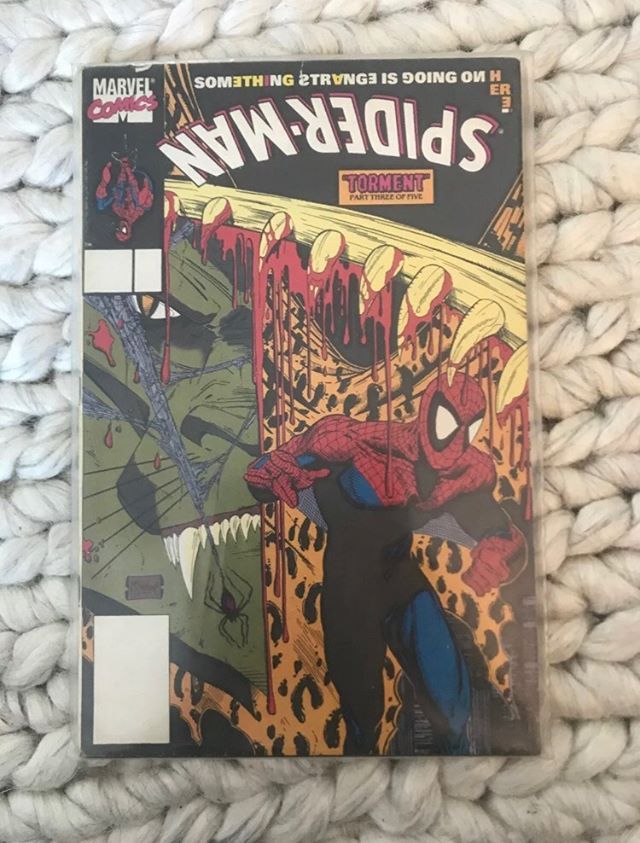
His issue was Spider-Man #3 – from Todd McFarlane’s run. This issue was “Torment Part 3” from 1990.

Looking at the cover, there’s red flags abound! There’s no barcode, no pricing, and no issue number! The information on the book’s cover are entirely stripped away. To make matters even stranger, the background colours are also different.

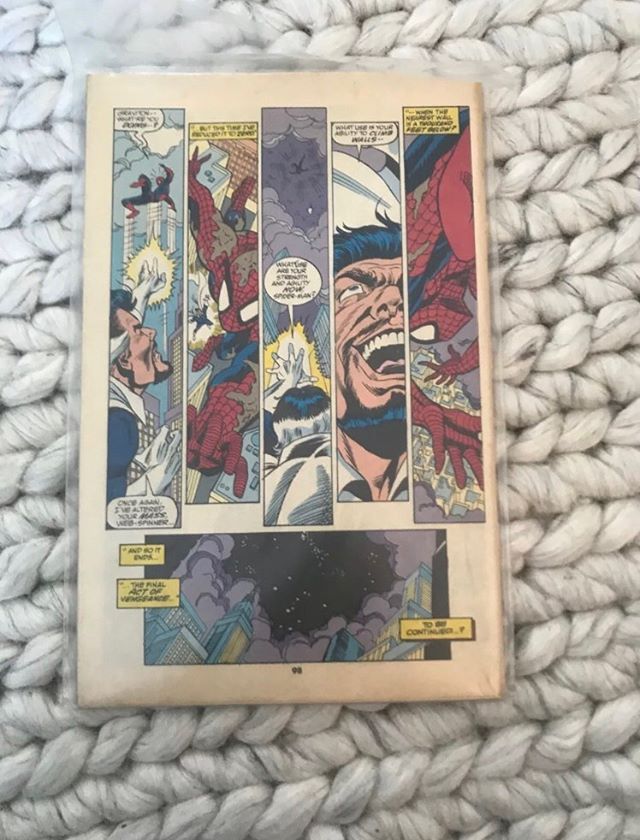
Benn also sent me a photo of the back of the book:

There’s no tearing or obvious removal of a back cover. The staples are intact. If you look closer, the cover actually wraps around to the back page. The book simply didn’t come with a back cover!

What gives? Benn’s book instantly reminded me of a Spider-Man giveaway series we saw here in Canada back in the early nineties.

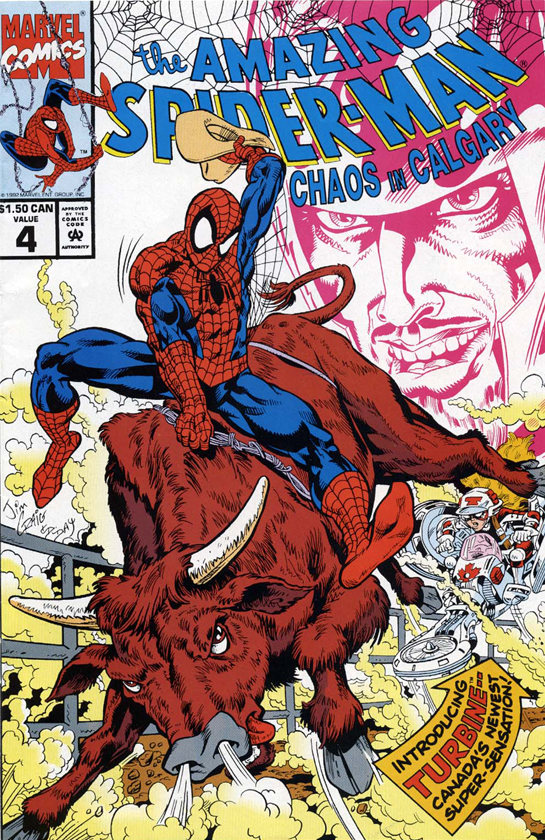
I personally had Spider-Man’s “Chaos in Calgary” and “Hard Ball” issues. They were part of a five-issue Spider-Man promo/giveaway from Marvel which was targeted to Canadians to have them read more Spidey books. Unlike Benn’s book, these books had both their prices and issue number on them. However, there was no barcode at all, let alone a spot for one on the cover.

Based on my prior experience on a few books without barcodes, and because Benn’s book featured a colour variant, I have to assume it was a reprint of some sort. Due to a lack of barcode, it must not have been scanned into stores – similar to the Direct Edition Spidey-head barcodes. I also could not find any information in the Overstreet Guide or Comics Price Guide, as if Benn’s book wasn’t actual “comic books” per se. Without a barcode, if Benn’s book was free or offered as a promotion like “Chaos in Calgary,” it would not get scanned into inventory at all – tracking wasn’t important because the book would have had no inherent value at the time.

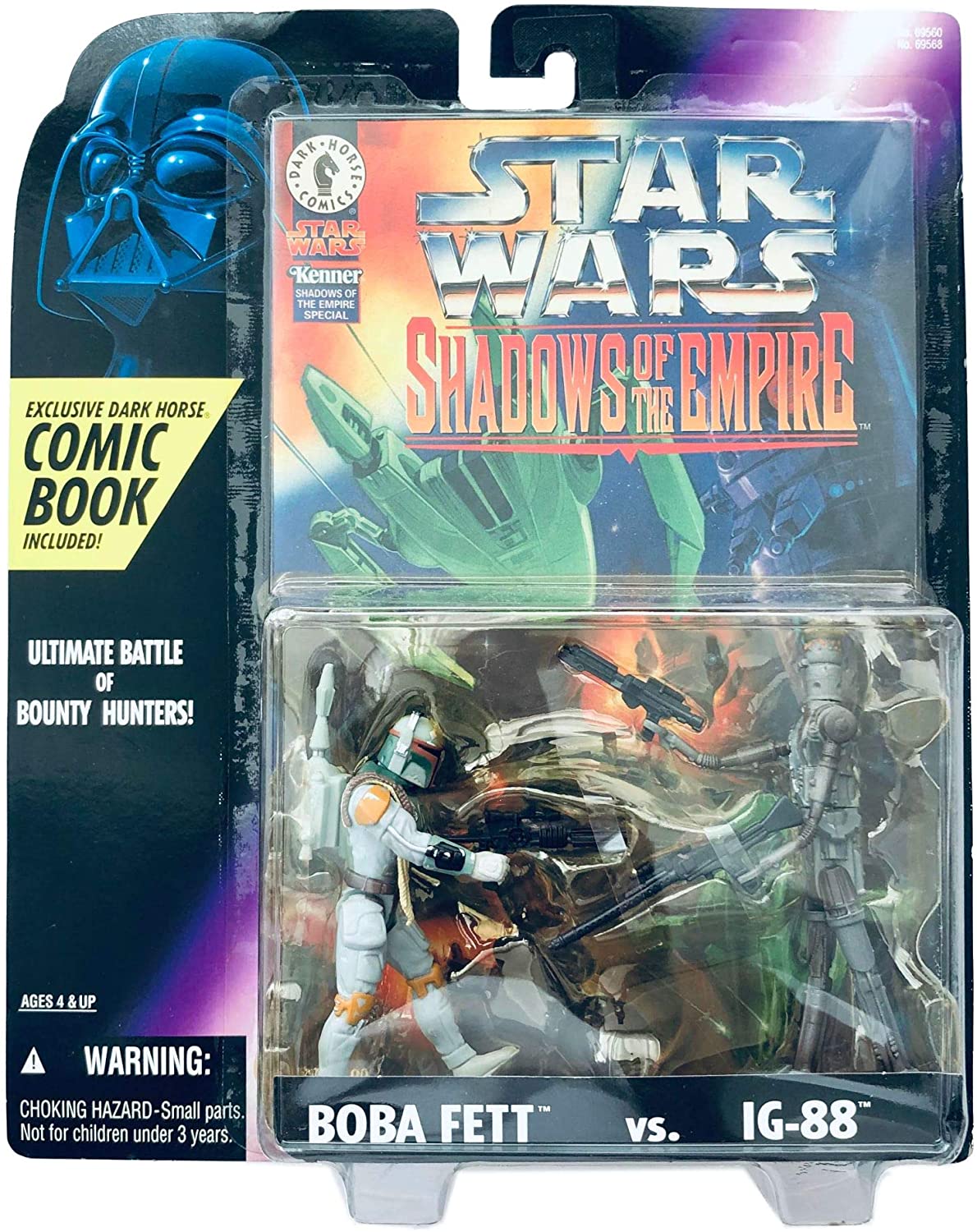
What Benn’s book reminds me of are the Comic Packs of the 90s. I remember one in particular which clearly had no barcode on the cover:

The Shadows of the Empire comic from Dark Horse all but confirms to me Benn’s book would have been part of a toy pack. Like Benn’s book, there’s no issue number, barcode, or price. Unlike Benn’s book however, the Shadows of the Empire book wasn’t necessarily a reprint because it hadn’t been published before. Benn’s book is a reprint for sure, but considering it to be from a toy pack, it may explain the lack of a back cover as the back would have been more expensive to print. The book would not have had a barcode because the barcode was on the packaging of the toy, not the book. It may also explain why I could not find any information of the “book” in either the Overstreet Guide or Comics Price Guide – because this may – and I’m using this term very loosely here – be labelled as a “toy” not a comic.

Personally, I’m not sure what it could be labelled as. Due to COVID-19, I certainly cannot go to any comic book or toy conventions to ask the dealers there.

Benn’s book leaves a lot of unanswered questions with it: was the book actually part of a toy or just a giveaway? Benn’s from the UK and certainly distribution and rules for it would have been different than in the Americas – does that play a factor to why there’s no numbering on it? Would you classify the book as a “toy?” If so, would “Chaos in Calgary” get a pass? Does packaging define the product? I’d argue Benn’s book is a comic book. Looking into the Overstreet guide, it doesn’t recognize Dark Horse’s Shadows of the Empire toy pack books. However, the Comics Price Guide does.

Unfortunately I am unable to offer Benn a true answer to his book. It certainly is a unique piece though! If you know of any action figures that may have sold with Benn’s Torment #3, please let me know!

Happy collecting, everyone!