Quesada No-More!

In case you haven’t heard yet, Joe Quesada, Marvel Comics’ Editor-in-Chief has stepped down to promote Axel Alonso to the position. You can read all about it here.

Quesada, of course, is still with Marvel. He was promoted to Chief Creative Officer back in June, which of course, you can read about it here.

What I want to simply say is that Mr. Quesada’s tenure with Marvel was triumphant in my eyes. I absolutely loved everything he did with Marvel – despite all the issues everyone else seemed to have with him. Obvious ones is how he completely flipped Spider-Man upside-down in the post-Civil War storylines. Of course, the increase in price for Marvel’s comics were also a bit of a hassle – but to me, they were small in comparison to other problems.

The number one thing which stood out for me with Joe, was his Cup O’ Joe column at Comic Book Resources, where he literally spoke to the fans through columns, as well as address important issues within stories. For that, he really made a society with Marve – something which started with Stan Lee, and continued because EiC’s like Quesada made it live on.

So with that, I’m honoured to say that I’ve met the guy (three times in a weekend) and I’m happy to see him move on to greater things.

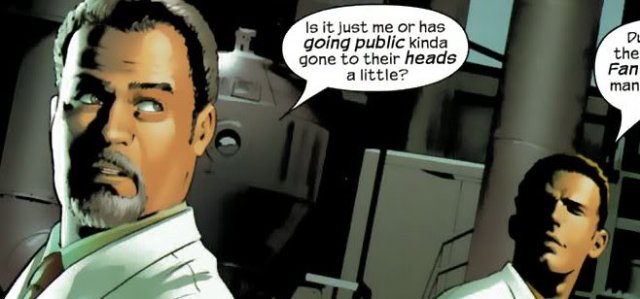
JoeQuesada

Keep on Space Truckin’, Joe, and good luck Mr. Alonso!

A New Year Shall Begin

I have to apologize for this blog’s neglect. With Christmas, New Years, work, and comics coming in late due to our supplier (not Diamond – the people who actually deliver the comics), I cannot supply reviews for this week. I also did have planned a “Best/Worst of Marvel in 2010” feature planned, but time is not long enough. On the other hand, it is almost the new year, so I can start absolutely fresh coming next week!

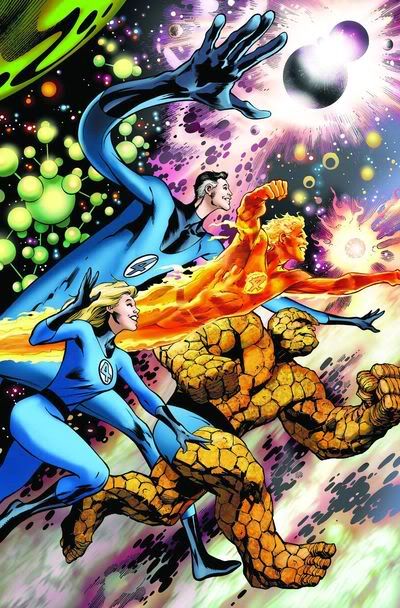
One thing to mention is that I am ABSOLUTELY excited for Marvel’s conclusion to the Fantastic Four. I’m sure you’ve all heard by now, as it has been on the news that the comic is coming to an end as the death of one of the FF will mark the end of the series.

Marvel has just released the final cover for Fantastic Four #588, so I figured I’d share for you the cover for #587 (where a member dies), and #588 – the final issue.

Fantastic Four #587 & Fantastic Four #588
Fantastic Three Fantastic Four's Final

Until then, I hope you all had a great holiday and have a Happy New Year!

Godspeed, and keep on Space Truckin’!

Porno, Crooks, and Comic Books

I’ve been aware of Marvel artist, Greg Land, for quite a few years. He has a very particular style of drawing – especially when it comes to facial expressions and body positions. He is currently working on X-Men-related stories, but has worked on Ultimate Fantastic Four and the Ultimate Power mini-series. Land also has a long history working with DC books, such as Nightwing and Birds of Prey. He also had a long run with the CrossGen’s series, Sojourn. Needless to say, Land has a great amount of experience with his short-time being in the comic drawing business.

PornFace

However, it does not take a rocket scientist to see Land’s work as questionable.

But let’s backtrack slightly for a little bit of comic book art history and law suits.

You may notice the likeliness of other celebrities in things, such as Arnold Swarchenegger in the newest rendition of Terminator: Salvation, or Carrie Fisher as a pez dispenser as Princess Leia. Needless to say, the celebrities do not have a problem with this because the movie studios and a few others own the rights to the likeliness of their characters. The celebrities “look” in those movies, for those specific franchises, are owned. It’s like Warner Brothers owning the rights to Batman movies. Fox cannot make a movie with even a hint of Batman in it because Warner Brothers own Batman and most things related to him. It sounds pretty standard and easy-peasy.

When looking at comics, it has been well-documented that artists have used other photographs, as well as celebrities, commercials, movies, and so on, as photo references. It has been done for decades in comic books. One book in particular dealt with a lawsuit, being Marvel Comics’ Doctor Strange, Sorcerer Supreme #15, where the likeliness of Christian musician, Amy Grant was used on the cover. The lawsuit ended with “a US District Court seal[ing] an out-of-court settlement between Grant and Marvel in early 1991, with a consent decree that Marvel did not admit to any liability or wrongdoing.”

The question is, how far can this go? Enter: Greg Land.

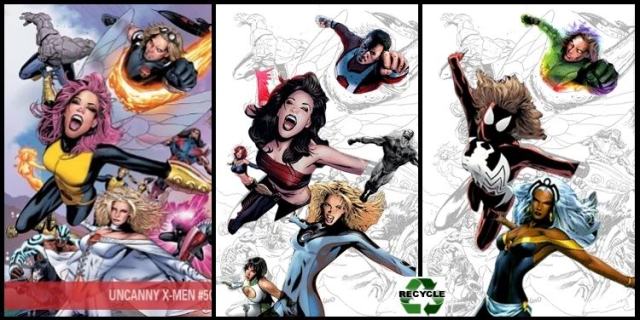
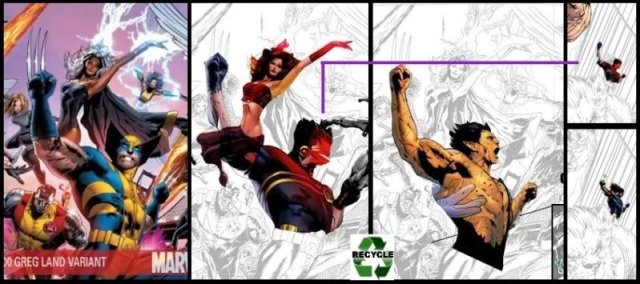
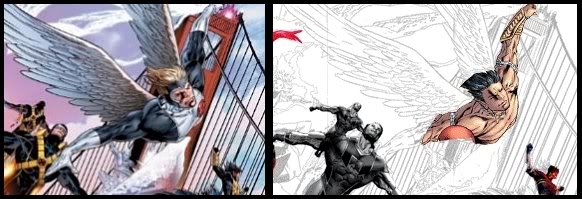
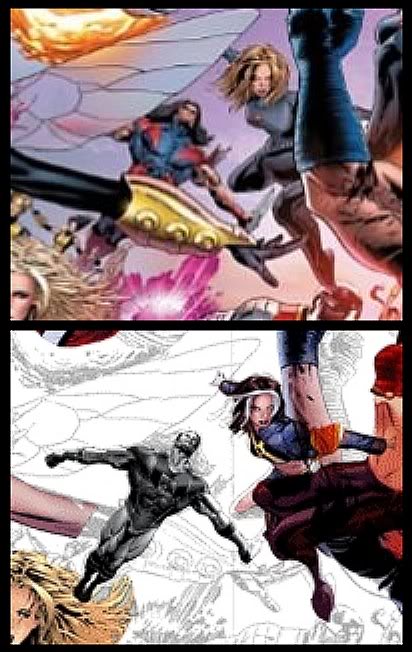
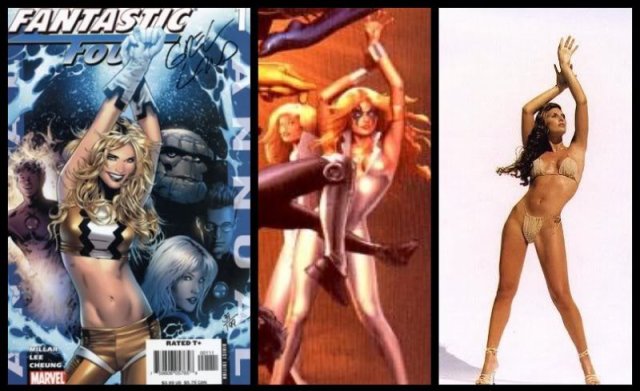
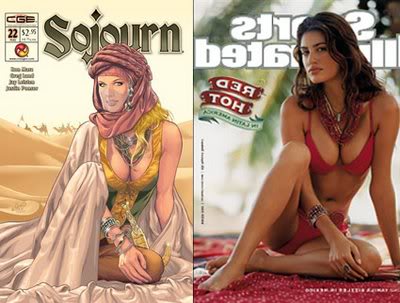
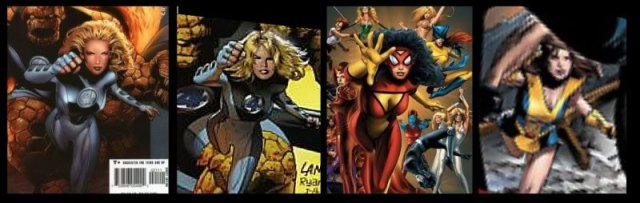
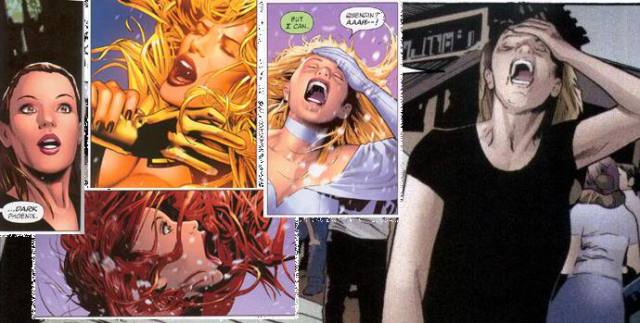
I’ll start right off-the-bat, stating that I am not accusing Greg Land of anything. I am just simply providing material which has been found via the internet. What I would like to bring forward, is the accusatory remarks placed on Land about his work. He has been accused by folks on the internet for copying other artists’ work, as well as his own. He is also known for presumably taking a lot of images from pornography, which even you may believe with the images provided, such as the many orgasm-esque shots women give (ie. the one above). Why he would trace his own work, I can assume is for one of two things: First is with the “if it’s not broke, don’t fix it” argument, while the second is that he is lazy. You can read about the controversies with Land’s work here and here.

UncannyFiveThirty

From a MyCup o’ Joe interview with Joe Quesada, he discusses Land’s work: “What’s happened with Greg is that it’s become a witch hunt and way too many people are having way too good a time hurting a tremendous artist’s reputation when he isn’t doing anything that is any different than any of us. Every line he draws now comes under scrutiny and in so many cases, people are ‘seeing’ things where are none.” Quesada also goes on to state: “I could go on and on about how many times Greg has bailed us out from some very bad deadline crunches.”

Comic critic Brian Cronin from Comic Book Resources, states about Land’s work on Uncanny X-Men #510: “People speak often about the ethical issues of someone copying a drawing directly from an image, and those concerns are likely fair enough, but when I think of Greg Land, my problems are not so much ethical ones, but the fact that his process results in terrible art and particularly terrible storytelling. When you only have a certain amount of poses to work with, you just can’t tell the story the correct way. And when the characters all look more or less the same (as they’re all based on the same small set of models/”actresses”), it just makes the book that much more incoherent.”

Needless to say, we have two well-established comic book people arguing two different points. One says what he does is okay, while the other suggests that he is blatantly copying other images and recycling older sketches.

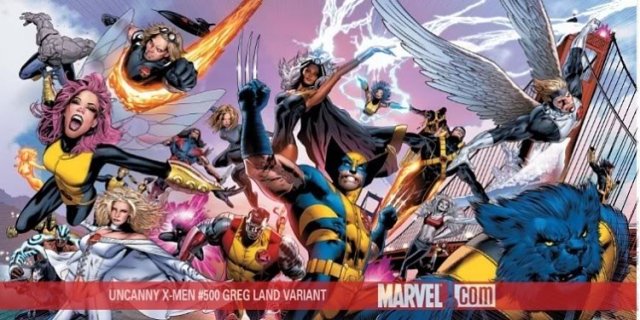
I will leave you with these images pulled from many of his comics. I do not know all of the “authors” that made some of the GIF or JPEG images, but thank you. I did however, use some of the photos (most notably, the X-Men #500 ones) from an awesome blog named JimSmash. His blog is hilarious and well thought-out, so go there now! (Or after you finish reading this one). He also gave me great permission to use his photos. So thank you, Jim! He also referenced me to the 4th Letter.net blog, where they came up with an animated GIF image of the Uncanny X-Men #500 cover you’ll see below. As for the rest of the pictures, I found them through various Google searches leading to message boards. There are more photos like these too – I just have not uploaded them all.

Also look at ComicVine here, for more examples.

As for Land, you can assume what you will. Is it coincidence, actual recycling, or are people looking too far into his art?

If you do believe he is recycling or copying – is he being lazy, or is it because the drawing works so well on many different levels? If you don’t, then why not?

View the pictures here and sound off below. If you’d like, you can also follow me on Twitter and Instagram!

———————————————————

Uncanny X-Men #500 Variant Cover

UncannyA

UncannyB

UncannyC

UncannyD

UncannyE

UncannyF

Is Sandra Bullock Psylocke?

Psylocke

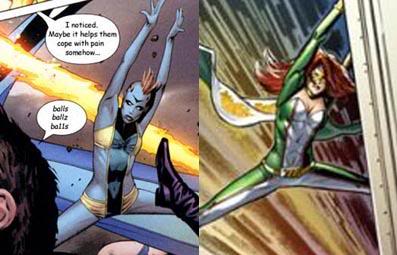
Photo Tracing and Recycling?

One

Two

Sports

MaybeTheSame

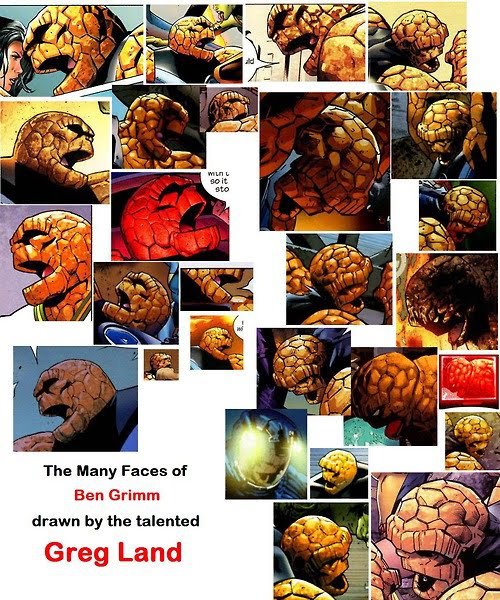
The many faces of The Thing

What pose is this, anyway?

Tracing

An “Oh” Face and Some Recycling.

OhFace

Is Jessica Alba a Trace or from Photo Reference?

FirstAlba

Black Canary?

Other Celebrity Coincidences
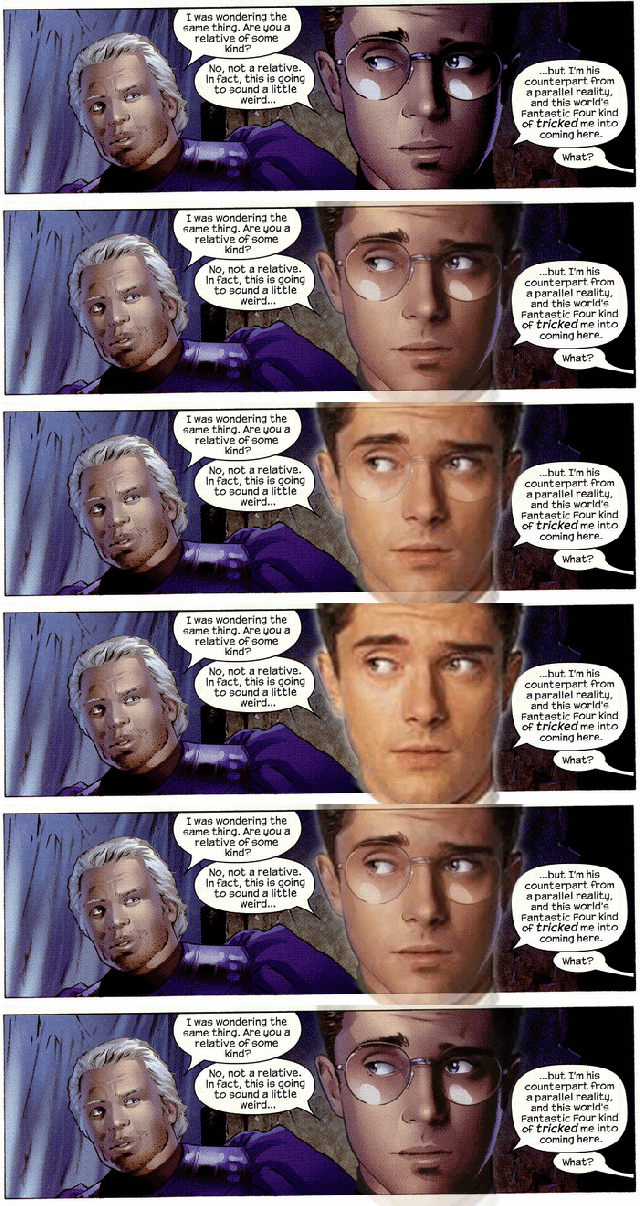
On the left, think of a young Neal McDonough, while Ben Afleck on the right. Beneath them, it is suggested that it is Topher Grace.

PerhapsMcDonoughandAfleck

PerhapsTopherGrace

Are You an Oakland Raider’s Fan?
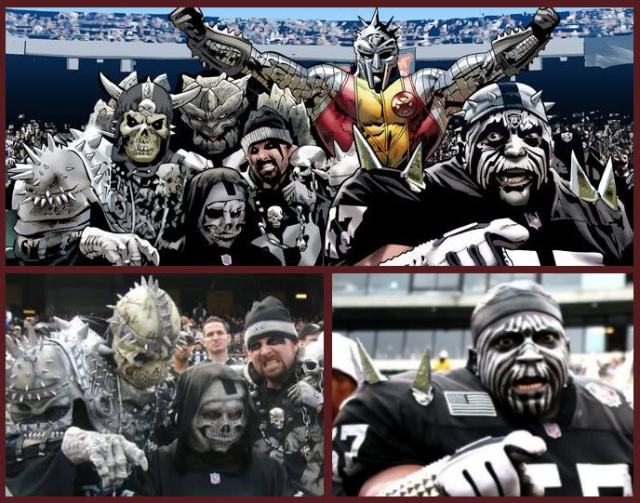
From Uncanny X-Men #509.

Raiders

Enjoy Starbucks

Starbucks

Possibly a Pornography Image?

Shameless

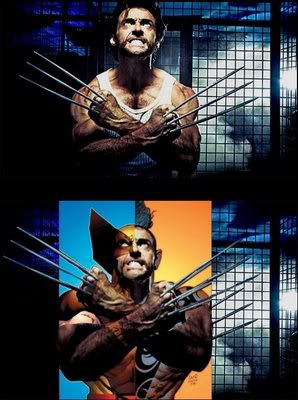
Hugh Jackman is Still Wolverine

Wolverine

Until next time, keep on Space Truckin’!

What’s a CGC?

Hey, folks! First I’d like to say I’ll be a few days late on my Wednesday reviews because I’ll be off to Toronto for the evening. I apologize for any inconvenience this may or may not cause.

Secondly, as promised, here is my explanation of the CGC!

I was fortunate enough to be able to deal with the CGC when I met Stan Lee in Toronto last August for Hobbystar’s FanExpo event. In a nutshell, it’s Canada’s version of the San Diego ComicCon (or SDCC).

I was one of the first people in line to have something signed by Stan Lee – that being my copy of X-Men #15 from December of 1965. It was a dream come true – to meet my childhood idol AND to have him sign something he actually created.

While in line, CGC had a sign there stating that they would be taking submissions for their signature series. Someone from CGC (actually it was someone who was licensed by the CGC, Desert Wind Comics) was present to witness the signing.

Here’s where you ask, “Wait. How can you prove the book is signed? Why does it matter?” Enter the CGC.

What is the CGC?

The Certified Guaranty Company, also known as the CGC, is a company dedicated to the grading, acting, consistency and commitment to comic books and their collectors. They are, by all means, the largest unofficial-official “authority” in comic book collecting. But more on that later.

What does the CGC do?

The CGC will grade your comic book with a scale from .5 to 10.0. To be fair, it also goes through three stages of grading. The Restoration Detection Expert, the Pre-Grader, and the Grading Finalizer. Hefty, eh? Each person does their own job and makes notes about the grading. Once all three graders have finished grading, they will “average” out the scores they give to make a final score. If there are disagreements, they will be discussed until a final answer is made.

CGC Labels
Have you ever been to a comic book store or a comic book convention and witnessed books in plastic with numbers above them? That’s totally CGC’s fault. But what do they mean?

Let’s explain the label first. Here’s a CGC graded copy of Avengers #4 I pulled from the world wide web. Click on it for a larger view or open it in a new window.

Firstly, notice the big 9.8 on the left. That is the grade which CGC gives the book for its quality. Following to the right, we see the book information. So Stan Lee wrote the story, followed by the artists, Jack Kirby and George Roussos. In the middle, we have the name of the book and the date. If there were any “problems” with the book, such as the discolouration over time, it may say “Cream to off-white pages” or something under the date.

To the right of the date we will see if there is any relevance to the story at all. For this, we see that this is the first issue appearance of “Silver Age Captain America” and “Sub-Mariner appearance.” To the far right is a holo-foil CGC label.

The barcode in the center is the CGC Certification number. You can plug that into their website to see some information/verify your book.

That’s not all to the grading process. There’s still colours!

Blue (Universal): Much like that issue of Marvel Premiere #3 above, the colour blue is the most common of the gradings. Blue means it is a standard book. Any book you would hand in, whether it be brand new or from the 1930’s, will be given a blue label.

Purple (Restored): This colour means the book has been restored in some way or another. It is noted how the quality of the restoration is done as well, where A is amateur and P is professional. Next to those, it will suggest if the restoration was slight, moderate, or extreme – telling how much restoration has been done. It will also say what was done underneath the date of the book.

Green (Qualified): A green colour means there is a defect in the book which must be noted – under the date on the label. This comes into play where a signature may not be authenticated or a price sticker has been placed over the book. A book can still reach a high grade with a sticker on it, so it still does not hurt to get it graded.

Yellow (Signature Series): It is simply a book which has been signed a notable person, has not been restored, and the signature was witnessed by an employee of the CGC. One thing to note is that if the signature is by someone who did not write the book, it will still get a yellow tag – as long as the name is authenticated by a member of CGC. Unfortunately, that means comics you may have signed by legends like Jack Kirby or Carmine Infantino will never be able to be authenticated. Recording devices, testimonials, pictures, etc, do not count. Only CGC approved staff does. The date of the signature will be noted underneath the date the book was published.

Yellow/Purple (Signature Series/Restored): I think this one is pretty self explanatory.

Does it Change the Price?

Since getting my X-Men #15 signed and graded at a 4.0, the NUMBER ONE thing I’ve been asked is, “How much is it worth now?”
The answer: It varies.

Why?

Some people like to collect comics without them “harmed,” regardless of the signature. Although, arguably, an authentically signed comic should be worth more, that does not always reflect how much someone will pay for it. For example, in my eyes, I could not put a value on that comic. If I did, it would be astronomical in price. This goes with absolutely every comic signed everywhere.

Let’s take an example here:
Going from the comic book database Comics Price Guide, Fantastic Four #5 – the first appearance of Dr. Doom – with an assumed 9.4 grade from its seller would go for $16,000. However, currently based on the site, a 9.4 CGC grade should go for $40,000. Yet, a CGC 9.4 sold for $47,977 a couple of years before in 2008. Is the price guide wrong? Would someone be ripped off buying the book for $40,000 instead of $47,000? If it was signed, does it become more expensive or less because the cover was “ruined” with a signature?

Problems with the CGC

Although they are known world-wide for their reviews, of course some may differ on opinions. Take for example a professionally restored comic with a purple label. Arguably, that would be the comic restored in its original form. However, to some, that would destroy the quality of the comic – much like a signature series would be looked at. Thus, would a purple label diminish the comic quality for the owner?

Then of course you have opinions. While the example of the Fantastic Four #5 is one, you may also consider that your comic quality is still better than what CGC grades it. I had a discussion with my local comic book shop owner, and we both agreed that it does boil down to opinion. Although they are “official,” they are still a self-created grading company with their own in-house professionals. Much like the Watchmen, who oversees the CGC? Or are we all complicit for them to make the decisions for us?

Conclusion

Given all you have read here, you may find yourself asking, “do the CGC seem qualified or unqualified to be doing what they’re doing?”

As for some other general questions to think about, ask yourself: Does a signature, even by a comic great ruin the quality of the book? Are restored comics worth less, despite more money being put into them to make them better? Do CGC gradings make comic prices unfairly inflated?

Generally speaking, the comic book collecting community (CBCC?) is fine with how CGC does their reviews and grading. Most conventions use CGC as their go-to grader. Other companies like PGX Comic Grading Services also provide a nice alternative to CGC.

If there are any other questions you have, feel free to comment below. I’d love to generate some discussion based off of this. Also check out the CGC and Comics Price Guide websites off to the right of this blog for more information.

Until then, keep on Space Truckin’!